













Laser welding cobots eliminate post-process grinding and reduce heat distortion for UK Tier 1 and 2 manufacturers using Universal Robots and IPG systems.
Direct Advantages of Laser Welding Cobots over TIG and MIG
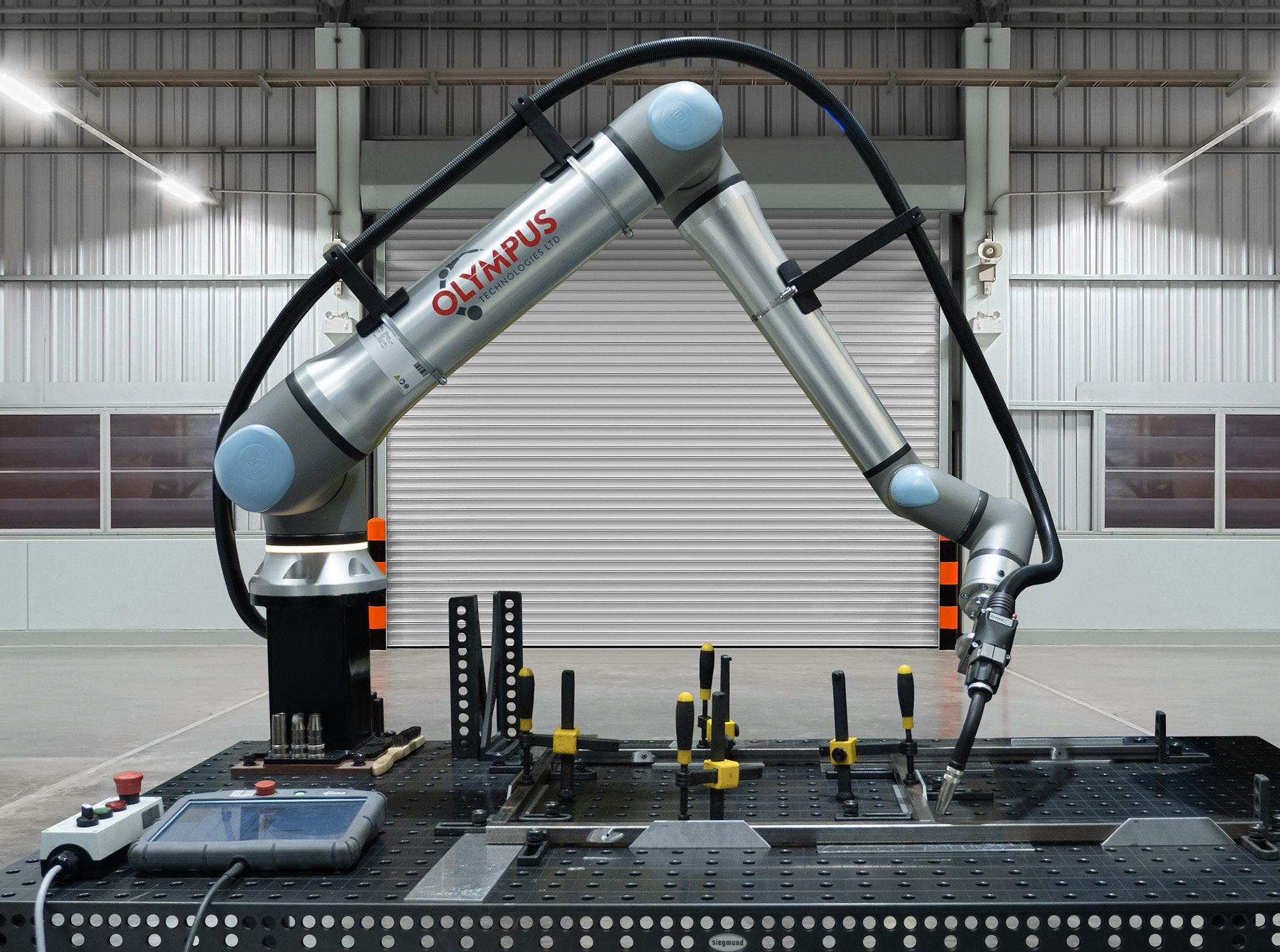
Laser welding cobots provide a primary advantage in the elimination of post-weld processing through high-energy density and minimal thermal input. Traditional MIG welding creates a wide heat-affected zone (HAZ) and significant spatter, while TIG welding requires slower travel speeds to achieve aesthetic consistency. A laser cobot system, typically integrating a fibre laser source with a collaborative arm like the Universal Robots UR10e, maintains travel speeds between 20mm/s and 80mm/s depending on material thickness. This speed is often three to five times faster than manual TIG welding on equivalent joints.
The precision of a laser beam allows for a concentrated energy focus, usually within a 0.2mm to 0.5mm spot size. This focus reduces the HAZ by up to 90% compared to traditional methodologies. For UK manufacturers working with stainless steel (304/316) or thin-gauge aluminium, this prevents the common issue of panel warping and thermal distortion. When distortion is eliminated at the source, the need for manual straightening or jig-correction is removed from the production workflow.
Achieving a Zero-Grinding Finish
The phrase zero-grinding refers to the ability of a laser source to produce a weld bead that requires no abrasive finishing before coating or polishing. In a typical TIG application for the catering or medical industries, post-weld grinding and buffing can account for 50% of the total labour cost per part. A laser welding cobot produces a flat, consistent bead profile that allows parts to move directly from the welding cell to the powder coating line or assembly station.
We observe that these efficiencies are most prevalent in materials between 0.5mm and 6.0mm in thickness. Handheld laser welding tools introduce human variability in focal distance and travel speed, which leads to inconsistent penetration. By mounting the laser head on a cobot, the system maintains a fixed focal point and constant velocity within +/- 0.05mm of repeatability. This mechanical consistency ensures the weld remains within the specified EN ISO 15614-11 parameters for every cycle.
Material Compatibility and Penetration Depths
Laser cobots excel at joining dissimilar thicknesses and reflective metals that challenge standard MIG processes. A 1.5kW fibre laser source can achieve full penetration on 4mm stainless steel from a single side. When working with 1mm mild steel, the process is instantaneous, creating a hermetic seal without the burn-through risk associated with high-amperage TIG welding.
- Stainless Steel: High-speed travel prevents chromium depletion and maintains corrosion resistance.
- Aluminium (5000/6000 series): The high power density breaks the oxide layer efficiently with minimal heat soak.
- Galvanised Steel: Precise control over the laser pulse reduces zinc vaporisation, resulting in cleaner joints than MIG welding.
- Brass and Copper: Modern fibre lasers at specific wavelengths can overcome the reflectivity issues that previously hindered laser adoption in small-scale UK fabrication shops.
Compliance and Safety Requirements for UK Installations
Operating a Class 4 laser within a manufacturing environment requires strict adherence to BS EN ISO 10218-1 and the Control of Artificial Optical Radiation at Work Regulations 2010. Unlike MIG or TIG cobots that can often be used with simple flash screening, a laser cobot requires a fully light-tight enclosure. This enclosure must be interlocked with the cobot controller to ensure the laser source is disabled if a door is opened during operation.
We integrate safety PLCs that monitor the status of the enclosure, the laser source, and the cobot’s safety planes simultaneously. Viewing windows must be fitted with certified laser safety glass (OD7+ rating for 1064nm wavelengths) to protect operators from reflected beams. While these safety measures increase the initial footprint and capital expenditure, they allow the cell to run at maximum power without risking the eyesight of personnel on the shop floor or in nearby workstations.
Transitioning from Manual Craft to Automated Precision
The shift from manual laser welding to cobot-integrated laser welding marks the transition from a tool-assisted process to a fully deterministic manufacturing cell. While manual laser welding speed is impressive, the fatigue of the operator eventually degrades the precision of the weld path. Automating this process ensures that the first part of the morning shift is identical to the last part of a night shift, providing the level of traceability required by UK aerospace and automotive supply chains.
This precision becomes a commercial advantage when considering the entire assembly line. When parts are welded with sub-millimetre accuracy and zero distortion, downstream processes like robotic assembly or press brake folding become more reliable. If the input parts are consistently within tolerance, the rejection rate at final inspection drops to near-zero, significantly improving the overall equipment effectiveness (OEE) of the plant.
Frequently Asked Questions about Laser Welding Cobots
What is the typical ROI for a laser welding cobot in the UK?
Most UK manufacturers see a return on investment within 12 to 18 months. This calculation includes the reduction in gas consumption (up to 50% less argon), the elimination of grinding consumables (flapper discs/belts), and the repurposing of skilled staff from finishing tasks to higher-value roles. Reducing a three-stage process (weld, grind, polish) to a single-stage process (weld) is the primary driver of this ROI.
Can a laser cobot replace a MIG cobot for heavy structural work?
Typically, no. While a laser is superior for precision and thin-gauge materials, MIG welding remains more effective for gap bridging on heavy structural steel or when joints have poor fit-up. Laser welding requires tight tolerances, ideally with gaps not exceeding 10% of the material thickness. For high-volume heavy fabrication, refer to our cost-per-metre guide for MIG welding.
Does laser welding require specialised gas?
Laser welding typically uses high-purity Argon or Nitrogen. The gas flow rates are lower than MIG/TIG, often between 5 and 10 litres per minute. The primary role of the gas is to protect the optics from spatter and to prevent oxidation of the weld pool. Precise gas control is managed through the cobot’s digital I/O, ensuring flow only occurs during the active welding cycle.
Related Technologies and Comparative Guides
For businesses deciding between high-speed laser and traditional automated TIG, our TIG vs Laser zero-grinding guide provides a detailed breakdown of finish quality. If the production bottleneck is actually at the bending stage rather than welding, the ROI analysis for press brake tending may offer a more effective path to increasing throughput. For existing cells, ensuring longevity in high-frequency environments can be achieved by using cobot welding covers to protect the arm’s joints from reflected laser energy and fine particulate dust.