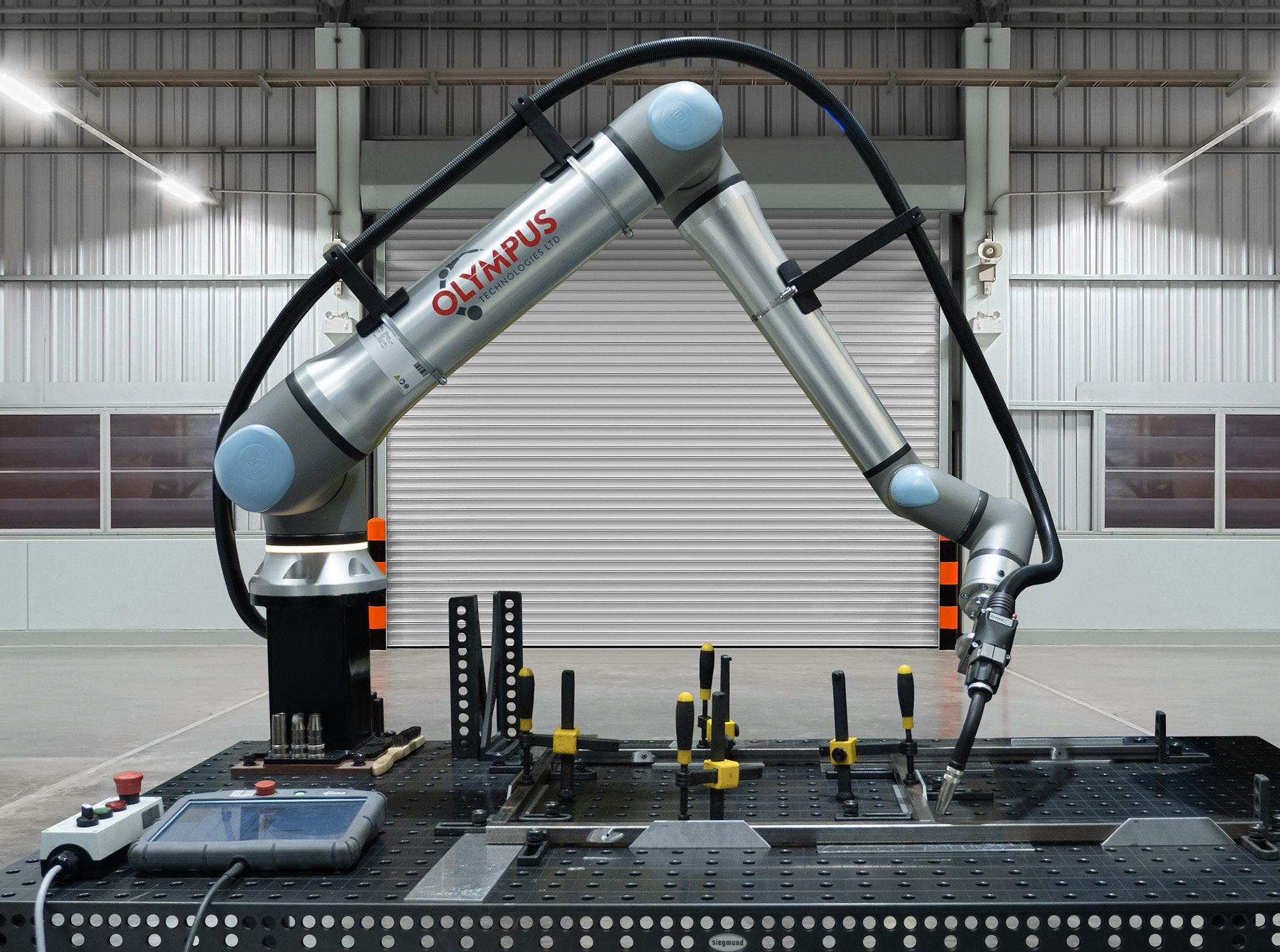














Manufacturing automation processes refer to the systematic integration of robotic hardware, control software, and peripheral sensing technologies to execute repetitive industrial tasks with minimal human intervention. As a specialised robotics and automation integrator, Olympus Technologies implements these processes to help UK and European manufacturers replace manual constraints with high-speed, 24-hour production cycles. These systems primarily utilise industrial robots for high-payload, high-speed requirements or collaborative robots (cobots) for flexible, shared-workspace applications where floor space is limited.
This page covers the definition, primary categories, and integration methods of automated manufacturing systems by a robotics and automation integrator. It does not cover manual tool operation or non-robotic mechanical conveyors without programmed logic controllers.
Primary Categories of Manufacturing Automation
From the perspective of a robotics and automation integrator, automated manufacturing is categorised by the level of flexibility and the nature of the production volume. Fixed automation, or 'fixed-purpose automation', is used for high-volume production with dedicated equipment. Programmable automation allows for batch changes via software updates, while flexible automation enables the system to switch between different product types without physical reconfiguration.
| Automation Category | Production Volume | Flexibility | Typical Equipment |
|---|---|---|---|
| Fixed Automation | High | Low | Custom transfer lines, dial indexers |
| Programmable Automation | Medium | Medium | CNC machines, industrial robots |
| Flexible Automation | Variable | High | Cobots, AGVs, multi-tool robotic cells |
Key Processes for Robotic Integration
The transition to an automated facility involves a structured engineering lifecycle managed by a robotics and automation integrator. This starts with a process audit to identify bottlenecks followed by the selection of the technical services required to design the cell. Integration includes mechanical assembly, electrical wiring, and the development of safety logic to ensure technical reliability.
- Design and Simulation: Modelling the reach and cycle time of the robot.
- Hardware Selection: Choosing between 6-axis arms, SCARA, or delta robots.
- Programming: Establishing the logic for Robot Machine Tending or complex movement paths.
- Commissioning: Final testing on the factory floor to ensure performance matches the design specification.
Quantifying the ROI of Automated Systems
A robotics and automation integrator identifies that Return on Investment (ROI) in manufacturing automation is driven by three primary variables: throughput increase, labour cost displacement, and scrap reduction. Payback periods depend on the specific shift patterns and production volumes because the capital expenditure is amortised over production hours. Manufacturers must account for both direct costs, such as the robot arm and safety fencing, and indirect costs, including floor space preparation and staff training. Hardware reliability and reduced downtime are leading drivers of long-term profitability in automated cells.
How does an initial process audit determine whether a collaborative or industrial robot is the optimal choice for a specific production line?
The selection between a cobot and an industrial robot depends on the 'Safety vs Speed' boundary. If a process requires high-speed movement or handling payloads exceeding 15kg-25kg, an industrial robot with physical guarding is required to maintain operational velocity. If the application requires frequent human interaction or has a very small footprint, the process audit identifies the cobot as the technically appropriate solution. This decision is formalised during a risk assessment where the force and speed of the robot are compared against the proximity of operators.
| Selection Factor | Industrial Robot Fit | Cobot Fit |
|---|---|---|
| Speed Requirements | High (>2m/s) | Low (<1m/s) |
| Safety Protocol | Physical Fencing | Power & Force Limiting |
| Payload | High (Up to 1000kg+) | Low (Payloads below 25kg) |
| Setup Flexibility | Permanent Cell | Mobile/Modular |
How it works (process)
The automation integration process begins with a formal site survey and feasibility study. Engineers analyse the physical constraints of the production floor, cycle time requirements, and the specific geometries of the workpieces. This data informs the creation of a 3D simulation, which validates the robot's reach and identifies potential collisions before any hardware is purchased.
Once the design is validated, the build phase involves the fabrication of bespoke framing and the integration of control panels. The robot is programmed using industry-standard languages, and peripheral sensors are synchronised via a central PLC. The final stage involves Site Acceptance Testing (SAT), where the system is run under production conditions to verify it meets the pre-agreed performance benchmarks.
Technical Components and Ecosystem Integration
Systems designed for robotic palletising require specific vacuum or mechanical grippers. These tools are controlled via Programmable Logic Controllers (PLCs) which act as the central brain of the factory floor, synchronising the robot with conveyors and other machines.
Advanced cells incorporate Vision Systems for Robotics to allow the robot to identify and pick unsorted parts. Full technical support is available through our dedicated Robotics and Automation Integrator Services to ensure cell performance. For businesses with high product variability, Bespoke Gripping Solutions ensure that the automation can handle multiple part geometries without manual intervention. See Case Packing Robotics for more details. See Robotics Training and Upskilling for more details.
Frequently Asked Questions
What safety protocols apply to UK robotic manufacturing automation processes?
Robot installations require rigorous risk assessments to ensure safe operation alongside human staff. Compliance depends on the specific hardware configuration and the intended application environment. Collaborative applications also refer to specific force and pressure limits based on the application type.
How do manufacturing automation processes scale for UK businesses?
Integrated services allow manufacturers to customise cells for specific technical requirements, ensuring the chosen robot matches the precision and speed of the existing workflow. Deployment depends on the results of the initial process audit and the specific throughput targets of the facility. Mobile cobot systems offer particular flexibility for SMEs needing to re-task automation across multiple production lines.
Value proposition
Automating manufacturing processes addresses the critical challenge of labour shortages in the UK industrial sector. By deploying robotic systems, manufacturers can maintain consistent production volumes regardless of staff availability, while simultaneously increasing the quality of the finished product through repeatable precision.
Measurable outcomes
The success of a robotic integration is measured through Key Performance Indicators (KPIs) such as Overall Equipment Effectiveness (OEE) and Mean Time Between Failures (MTBF). Manufacturers achieve a measurable increase in parts-per-hour and a reduction in the percentage of parts requiring rework due to human error once the system is commissioned.
What's included / not included
Our automation packages include the full robotic arm hardware, custom-designed end-effectors, safety guarding or sensors, and the full control software suite. Excluded from standard process integration are the raw materials for production, ongoing utility costs, and structural building modifications.
Proof and evidence
We utilise industry-standard diagnostic tools to verify system performance before handover. This includes cycle time data logging and precision testing to confirm the robot achieves the required positional repeatability across sectors including aerospace and automotive.
Pricing approach
Pricing for manufacturing automation processes is determined by the complexity of the task and the required payload of the robot. We provide a transparent breakdown that includes the capital cost of hardware, engineering hours for design and programming, and site installation fees.
When this is the right fit
Robotic automation is the right fit for processes that are repetitive, ergonomically taxing for humans, or require extreme precision over long durations. It is not the right fit for highly artistic or non-standard tasks where the process cannot be defined by logic.
Related services and guides
To support the transition to automated manufacturing, we provide comprehensive technical support and maintenance programmes.
- Industrial Robot Applications: A guide to high-speed pick and place and heavy-duty handling.
- Laser Marking Automation: Integration of precise marking systems into production lines.
- Cobot Laser Welding Solutions: Automated welding for high-precision metal manufacturing.
- See Cobot Case Packing Solutions for more details.
| Integration Component | Function | Macro Context Influence |
|---|---|---|
| PLC | Logic Control | Synchronises multiple automated stages |
| EOAT | Physical Interaction | Determines the specific task capability |
| Safety Sensors | Collision Avoidance | Defines the interaction level with humans |