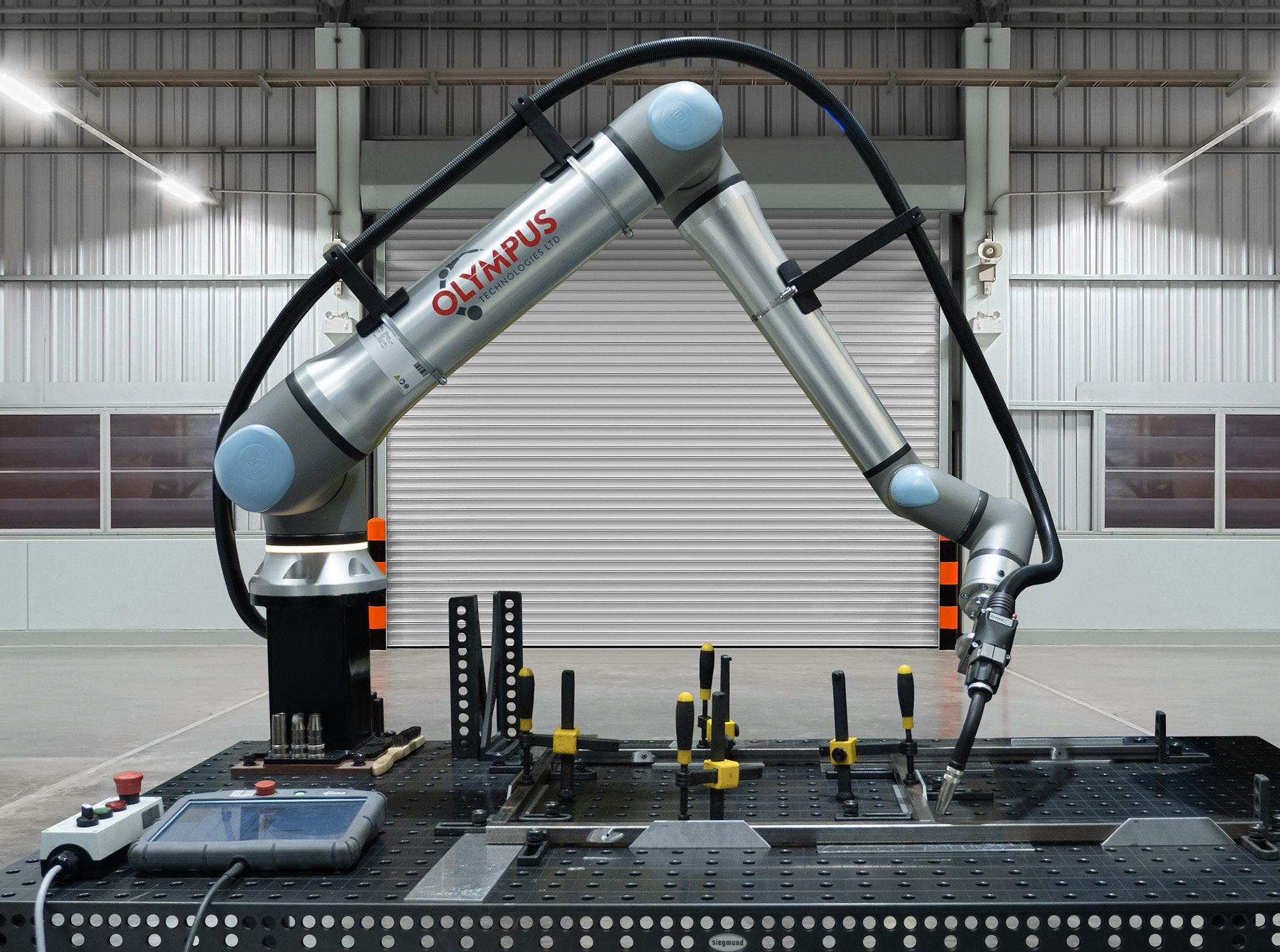














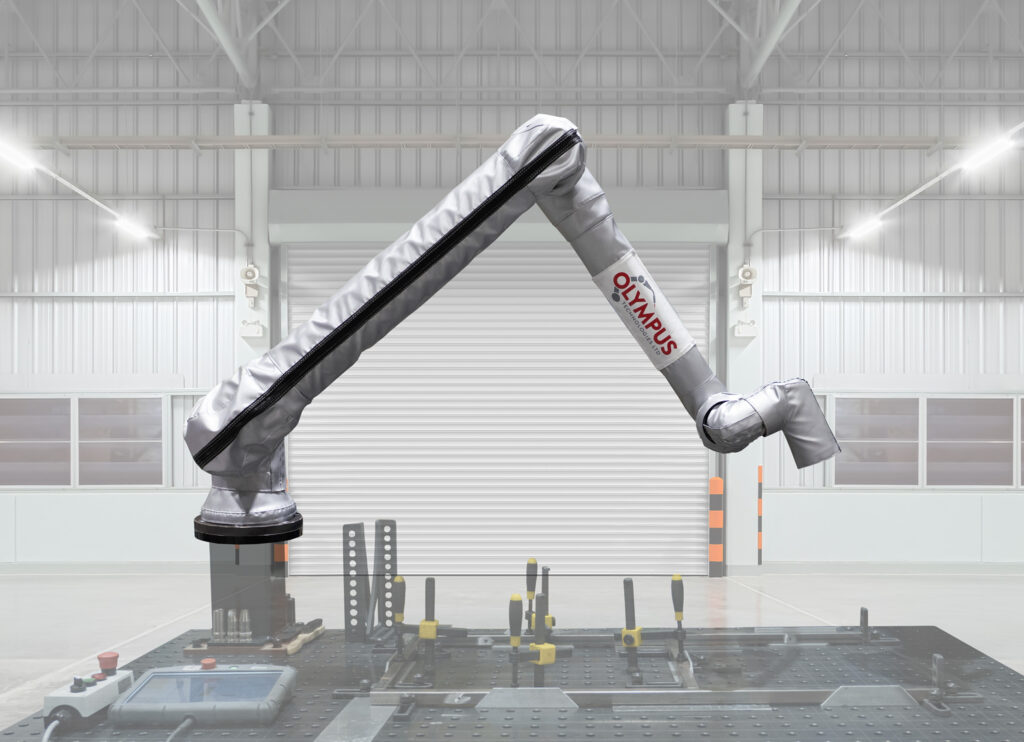
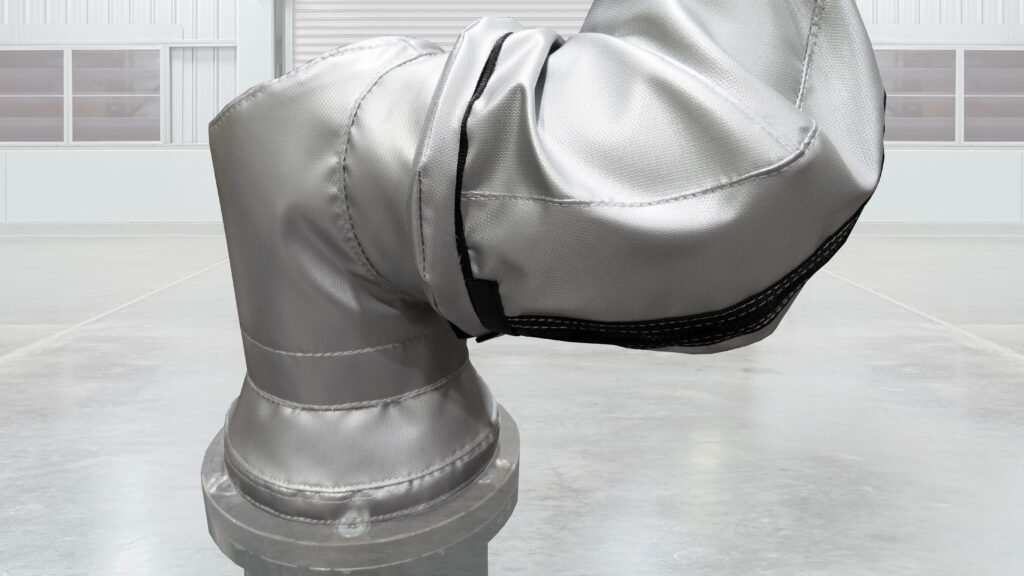
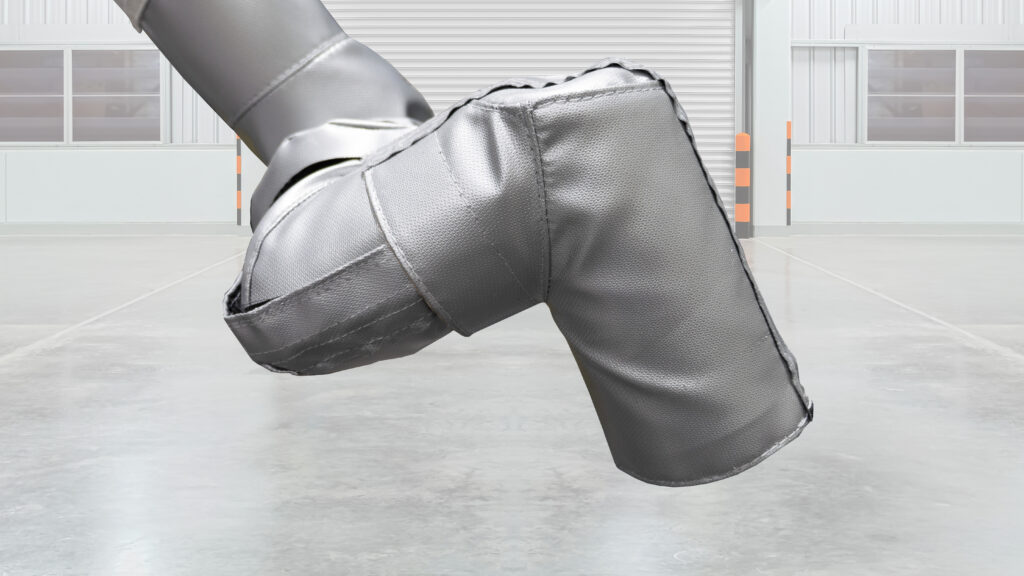
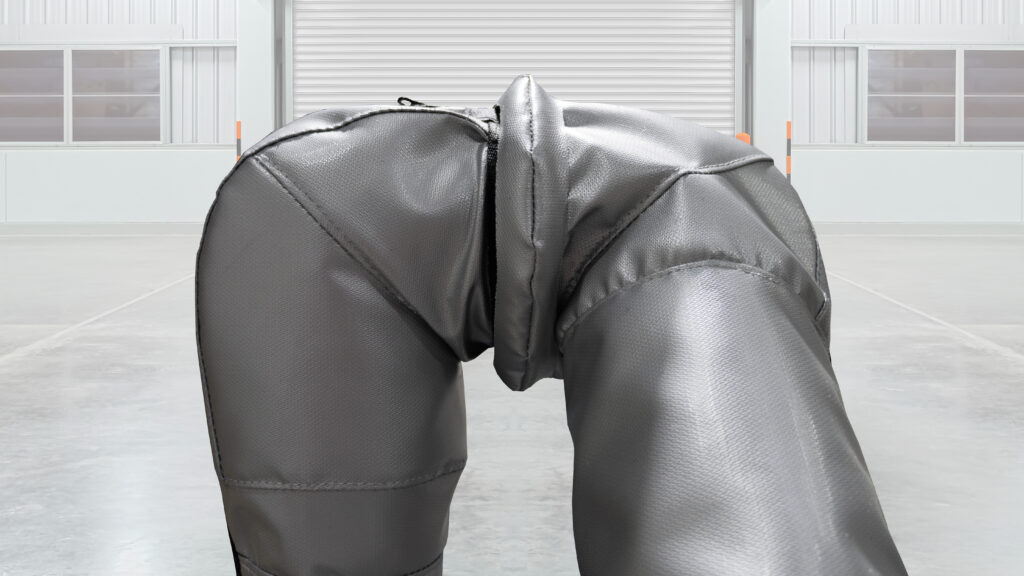
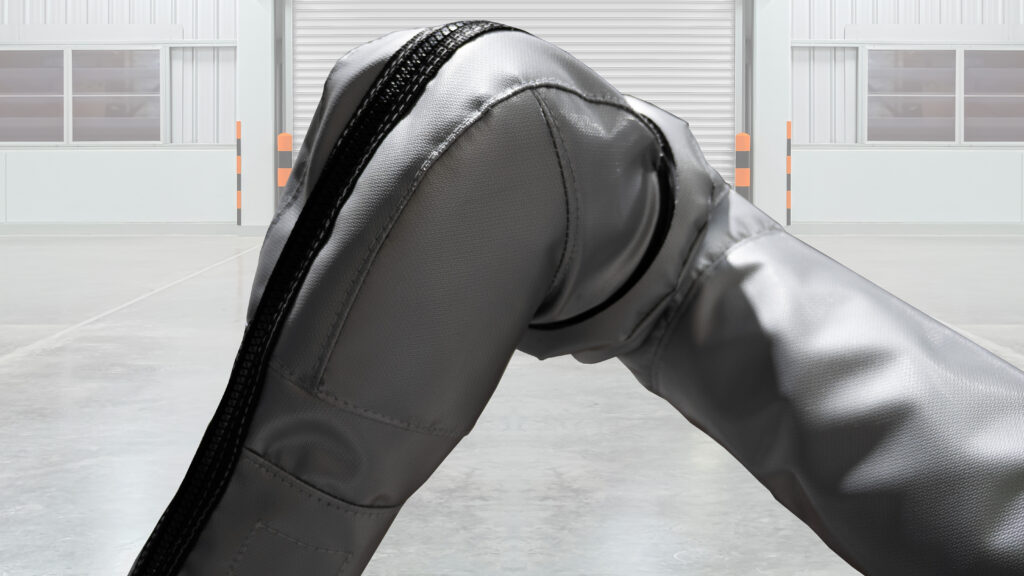
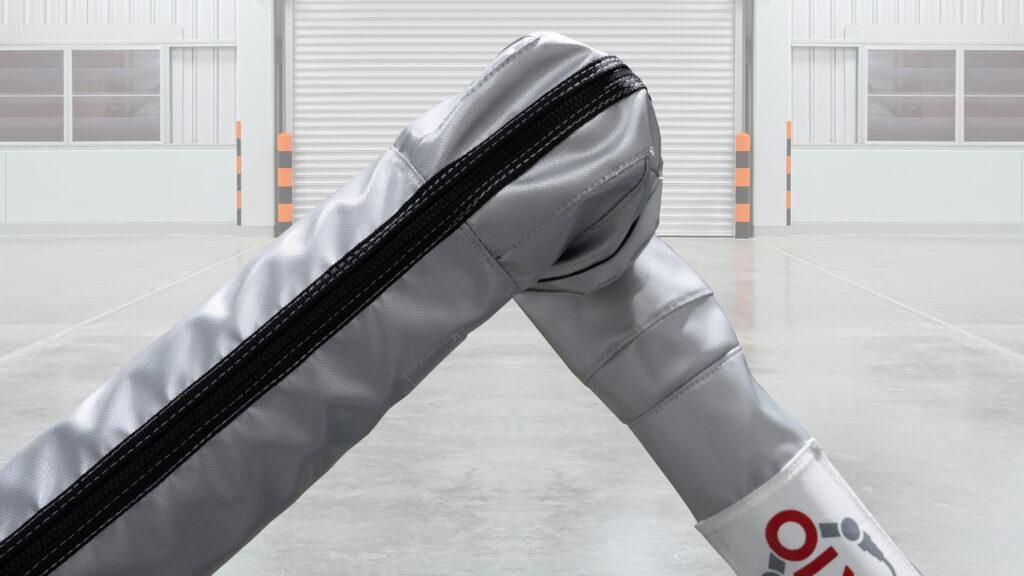
A cobot welding cover is a protective fitted cover designed to shield a collaborative robot from damage caused by welding environments. Rather than acting as a safety enclosure or guarding system, the cover is installed directly onto the robot arm to protect critical components from weld spatter, radiant heat, grinding dust, chemical contamination and general industrial wear.
In robotic welding applications, exposed robot joints, cabling and moving components are continually subjected to harsh conditions. Over time, weld spatter can adhere to robot surfaces, dust can contaminate moving joints, and excessive heat can accelerate component wear. A welding cover provides an additional protective layer that helps maintain robot reliability and reduce unplanned downtime.
Why Are Welding Covers Used On Cobots?
Collaborative robots are frequently chosen for welding applications because of their flexibility and ease of deployment. However, the welding process creates environmental hazards that can shorten equipment lifespan if left unprotected.
A welding cover helps to:
- Protect robot joints from weld spatter
- Reduce contamination from grinding dust and debris
- Shield surfaces from radiant heat
- Minimise cleaning and maintenance requirements
- Extend the service life of the robot
- Reduce costly downtime caused by environmental damage
For manufacturers running production welding operations, protecting the robot can significantly reduce maintenance costs over the lifetime of the system.
What Do Cobot Welding Covers Protect Against?
Welding Spatter
Molten metal particles generated during MIG welding can attach to exposed robot surfaces and gradually damage seals, cables and moving components. Specialist welding covers use heat-resistant materials designed to prevent spatter adhesion.
Heat Exposure
Although collaborative robots are designed for industrial environments, prolonged exposure to radiant heat can affect external components and cable protection systems. High-temperature cover materials provide an additional thermal barrier.
Dust And Abrasive Particles
Grinding, finishing and fabrication processes often take place near welding cells. Dust and abrasive particles can accumulate around robot joints and moving sections, increasing wear over time.
Chemical And Process Contamination
Some manufacturing environments expose robots to cleaning chemicals, paint overspray, coolant mist or other contaminants. Protective covers help prevent these substances from contacting sensitive robot components.
Common Materials Used For Cobot Welding Covers
Different applications require different protective materials.
| Material | Primary Benefit | Typical Application |
|---|---|---|
| Silicone | Excellent heat resistance | Welding and high-temperature environments |
| Kevlar | High resistance to heat and abrasion | Heavy-duty welding applications |
| Hypalon | Strong abrasion resistance | Dusty and abrasive environments |
| PTFE | Excellent chemical resistance | Chemical processing and spray applications |
The correct material depends on the operating environment, welding process and exposure risks.
Welding Covers vs Welding Guarding
A common misconception is that a welding cover performs the same function as a welding curtain, welding screen or safety enclosure.
A welding cover protects the robot itself.
Guarding protects personnel working around the welding process.
Most robotic welding installations require both considerations to be assessed separately. The protective cover helps prevent robot damage, while guarding and safety systems are determined through the machine risk assessment and overall cell design.
Which Robots Can Use Welding Covers?
Protective welding covers can be manufactured for a range of collaborative robots, including:
- Universal Robots UR3e
- Universal Robots UR5e
- Universal Robots UR7e
- Universal Robots UR8 Long
- Universal Robots UR10e
- Universal Robots UR12e
- Universal Robots UR20
A properly designed cover maintains full robot articulation and working range while providing protection throughout the robot's movement.
Discover Olympus Technologies Robot Welding Covers
Whether you're using a Universal Robots cobot or another robotic welding system, our team can help you find the right protective solution for your application. Contact Olympus Technologies today to discuss your requirements or learn more about our range of robot welding covers.
Protecting your robot from weld spatter, heat and contamination is essential for maintaining performance and maximising service life. Olympus Technologies supplies high-quality robot welding covers designed specifically for demanding industrial environments, helping manufacturers reduce downtime and protect their automation investment.
Frequently Asked Questions
Do welding covers affect robot movement?
No. Properly designed covers are tailored to the robot model and maintain full range of motion whilst protecting moving joints and external surfaces.
Can welding covers be used for MIG and TIG welding?
Yes. Material selection should be based on the specific process, heat levels and spatter exposure. MIG welding typically requires greater spatter resistance than TIG welding.
How long do robot welding covers last?
Service life depends on operating conditions, welding intensity and maintenance practices. Covers are considered a protective consumable and can be replaced when wear becomes excessive.
Are welding covers only used for welding?
No. Protective robot covers are also widely used in spraying, painting, machine tending, abrasive processing, chemical handling and dusty manufacturing environments.