













As a specialist Robotics and Automation Integrator, Olympus Technologies defines adhesive dispensing automation as the integration of robotic or collaborative systems designed to apply glues, epoxies, and resins with high precision and repeatability in manufacturing environments. By synchronising fluid pressure with robot path trajectory, these systems eliminate the inconsistencies of manual application, ensuring a uniform bead profile across every cycle. This technology serves as a primary solution for UK and European manufacturers aiming to reduce material waste, improve bond integrity, and address labour shortages in assembly roles.
This page covers the technical architecture of automated dispensing systems, including industrial robot and cobot configurations. It does not cover handheld manual dispensing tools or desktop DIY dispensers.
What is a Robotics and Automation Integrator?
A Robotics and Automation Integrator acts as the technical bridge between raw robotic hardware and a functional production solution. In the context of dispensing, the integrator selects the appropriate fluidic components such as pumps and valves and develops the software logic required to synchronise robot motion with adhesive flow. This expertise ensures that the system handles specific material rheology, such as thixotropic resins or low-viscosity cyanoacrylates, without compromising cycle times.
Key Types and Categories
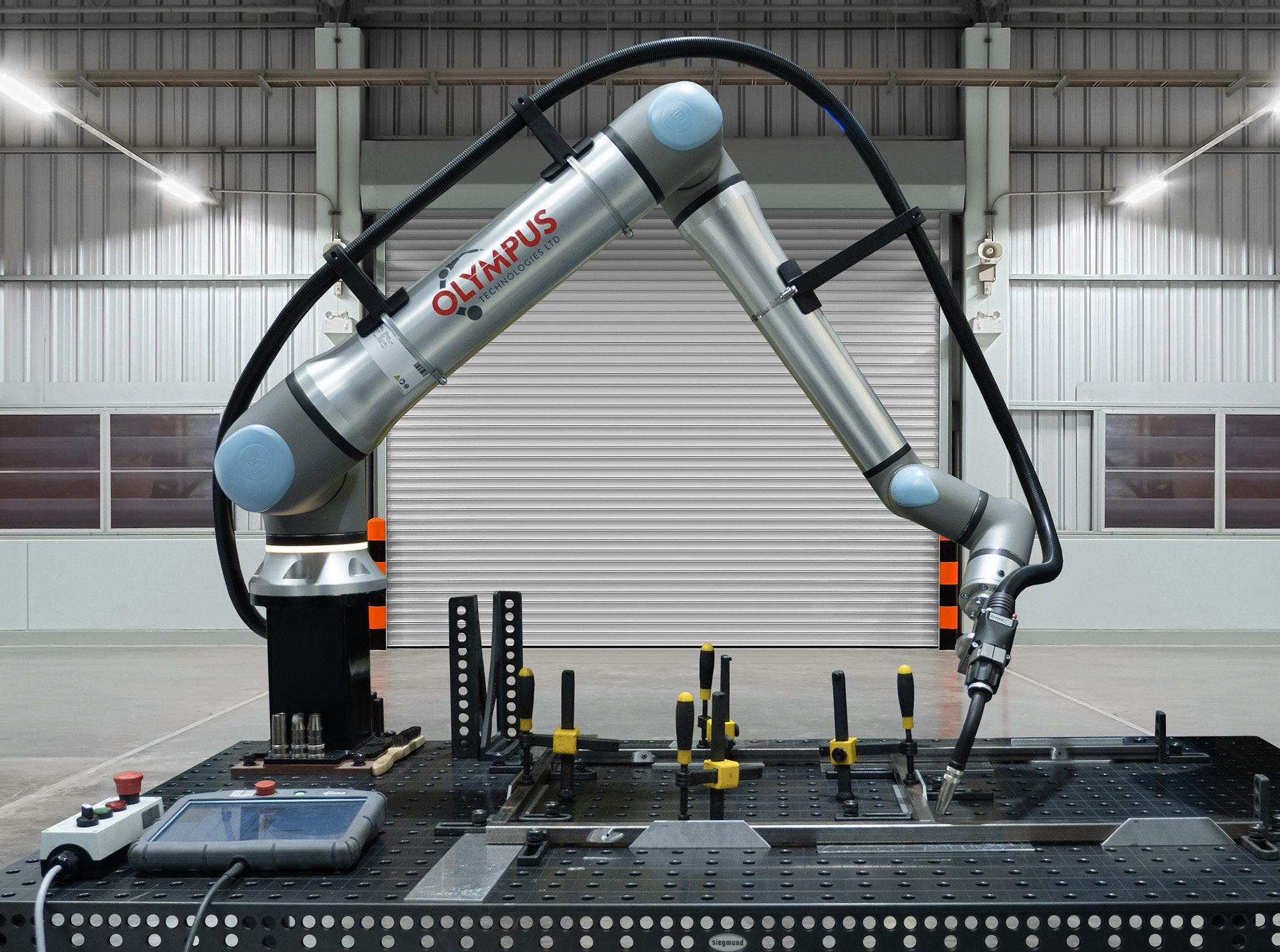
Automated dispensing is categorised by the mechanical architecture used to move the dispense head: high-speed industrial robots or flexible collaborative robots (cobots). Industrial systems, such as 6-axis robots or gantry setups, are utilised for high-volume production where cycle time and reach are the primary drivers. Conversely, cobot units provide a smaller footprint and can work alongside human operators without the need for extensive safety fencing, provided a risk assessment is completed.
| Attribute | Industrial Robot Systems | Collaborative Robot (Cobot) Systems |
|---|---|---|
| Primary Driver | High-speed throughput | Flexibility and ease of redeployment |
| Safety Requirements | Fixed guarding or light curtains | Power and force limiting (PFL) |
| Integration Complexity | Higher (requires PLC/Fieldbus) | Lower (standardised UR+ certified kits) |
| Footprint | Large, dedicated cell | Compact, mobile pedestals |
How Robotics and Automation Integration Works
For an integrator to achieve a consistent material application, the system controller must manage three variables simultaneously: nozzle speed, fluid pressure, and path trajectory. In Cobot Dispensing Solutions, the robot controller interfaces directly with the dispensing pump via analogue or digital I/O. As the robot accelerates into a curve, the controller adjusts the flow rate to prevent material thinning. This synchronisation prevents common defects such as over-application (blobs) or under-application (gaps).
Key components in these systems include:
- Volumetric Pumps: Ensure precise material volume regardless of viscosity changes.
- Dispense Valves: Control the start and stop of fluid flow with zero-drip technology.
- Precision Nozzles: Tailored to the specific bead width and material type (e.g., anaerobic, cyanoacrylate).
Further specialised applications include Conformal Coating Automation for protecting circuit boards and precise Dispensing Path Programming to handle complex 3D geometries.
How to Choose the Right Robotics and Automation Integrator Solution
Selecting the correct automation framework depends on the material's rheology and the physical constraints of the production line. A robotic integrator evaluates the decision based on payload (the weight of the dispense head and full syringes/hoses) and the required reach for the largest part in the assembly.
| Decision Factor | Low Volume / High Mix | High Volume / Low Mix |
|---|---|---|
| Recommended Architecture | Cobot-based | 6-Axis Industrial |
| Dispensing Material | Single-part adhesives | Two-part resins / Fast-cure |
| Typical Viscosity | 1 to 50,000 cPs | 50,000+ cPs (Requires high pressure) |
| Setup Fluidics | Syringe or cartridge-fed | Bulk drum pumps |
When material viscosity is high, the weight of high-pressure hoses and heavy-duty valves necessitates an industrial robot with a higher payload capacity, such as a 10kg+ unit. If the process requires frequent changes to the glue path for different small-batch parts, the ease of programming associated with collaborative systems becomes the priority.
Related Topics
Automated dispensing frequently operates as part of a wider assembly cell. For instance, Sealant Dispensing Systems precede or follow surface preparation stages like plasma treatment to ensure maximum adhesion. In high-speed environments, checking for defects is critical, which is why Dispensing Quality Control sensors are integrated to verify bead presence and width in real-time. This is particularly vital in Dispensing for Electronics Manufacturing where component density is high.
Common Questions
How to handle nozzle clogging? Clogging is prevented through automated purge cycles (spitting) and the use of air-free sealing. For materials sensitive to atmospheric moisture, nitrogen-blanketed feed systems are used.
How do maintenance schedules vary for two-part mixers? The frequency of maintenance depends on the pot life of the adhesive. Static mixers are disposable and replaced daily or after a specific downtime period to prevent material hardening. mixers require daily cleaning with compatible solvents as specified by the material manufacturer.
How does production volume impact the financial justification for this technology? A detailed Dispensing Automation ROI analysis usually considers the reduction in material scrap and the decrease in rework costs due to bond failures. Payback varies by the number of production shifts; running two or more shifts accelerates the return on capital investment compared to single-shift operations.
| Maintenance Task | Frequency | Purpose |
|---|---|---|
| Nozzle Inspection | Every Shift | Identify wear or partial blockages |
| Seal/O-ring Check | Monthly | Prevent fluid leaks in high-pressure lines |
| Controller Backup | Quarterly | Protect path programming data |
| Flow Rate Calibration | Weekly | Ensure volumetric accuracy |
Direct definition
Direct definition in adhesive automation refers to the precise specification of the dispensing parameters and hardware required to execute a repeatable bond. This involves defining the exact bead volume, required path accuracy (often +/- 0.1mm), and the specific chemical compatibility of the pump seals with the industrial adhesive. An integrator establishes these definitions to ensure the system meets the manufacturer's quality standards.
The definition also encompasses the software logic used to trigger the dispense valve. By establishing a "start-stop" delay within the robot programme, the integrator ensures that the adhesive flow begins only when the robot reaches the target velocity. This level of definition is what differentiates a standard industrial robot from a dedicated dispensing solution.
Key attributes
The primary attributes of an effective dispensing system include volumetric accuracy, path repeatability, and material pressure regulation. Volumetric accuracy ensures that the same milligramme amount of resin is applied every time, regardless of temperature-induced viscosity changes. Path repeatability refers to the robot's ability to follow the same 3D trajectory consistently, which is essential for liquid gaskets and structural bonding.
Additional attributes involve the "zero-drip" capability of the dispense head and the integration of "snuff-back" valves. These features prevent material stringing at the end of a cycle. System attributes also extend to the user interface, where operators must be able to adjust flow rates or purge the system during downtime without deep programming knowledge.
Context and usage
In UK manufacturing, the context for using automated dispensing is often driven by the need for higher throughput in the automotive, aerospace, and electronics sectors. Usage typically involves the application of structural adhesives in car door assemblies or the precise potting of electronic components to protect against vibration. Manufacturers use these systems to replace manual syringe application, which is prone to operator fatigue and inconsistent volumes.
The usage of these systems also extends to sealant application on large-scale components using high-payload industrial robots. In this context, the robot must manage heavy-duty hoses and bulk material drums. For smaller manufacturers, the usage context is often "high-mix, low-volume," where a cobot is moved between different workstations to apply glue to various product batches through the day.
Related concepts
Related concepts include surface preparation and atmospheric plasma treatment, which are often required to increase surface energy before dispensing to ensure bond strength. Another critical concept is UV curing; once an adhesive is dispensed, it may require a secondary automated stage where a UV lamp, often carried by the same robot or a secondary unit, hardens the material in seconds.
Further related concepts involve vision-guided dispensing, where integrated cameras detect the part position and adjust the robot path in real-time. This accounts for variations in part placement on a conveyor. Finally, the concept of "fluidics" covers the entire supply chain of the material from the bulk container through the degasser to the dispense nozzle, all of which must be managed to prevent air entrapment.