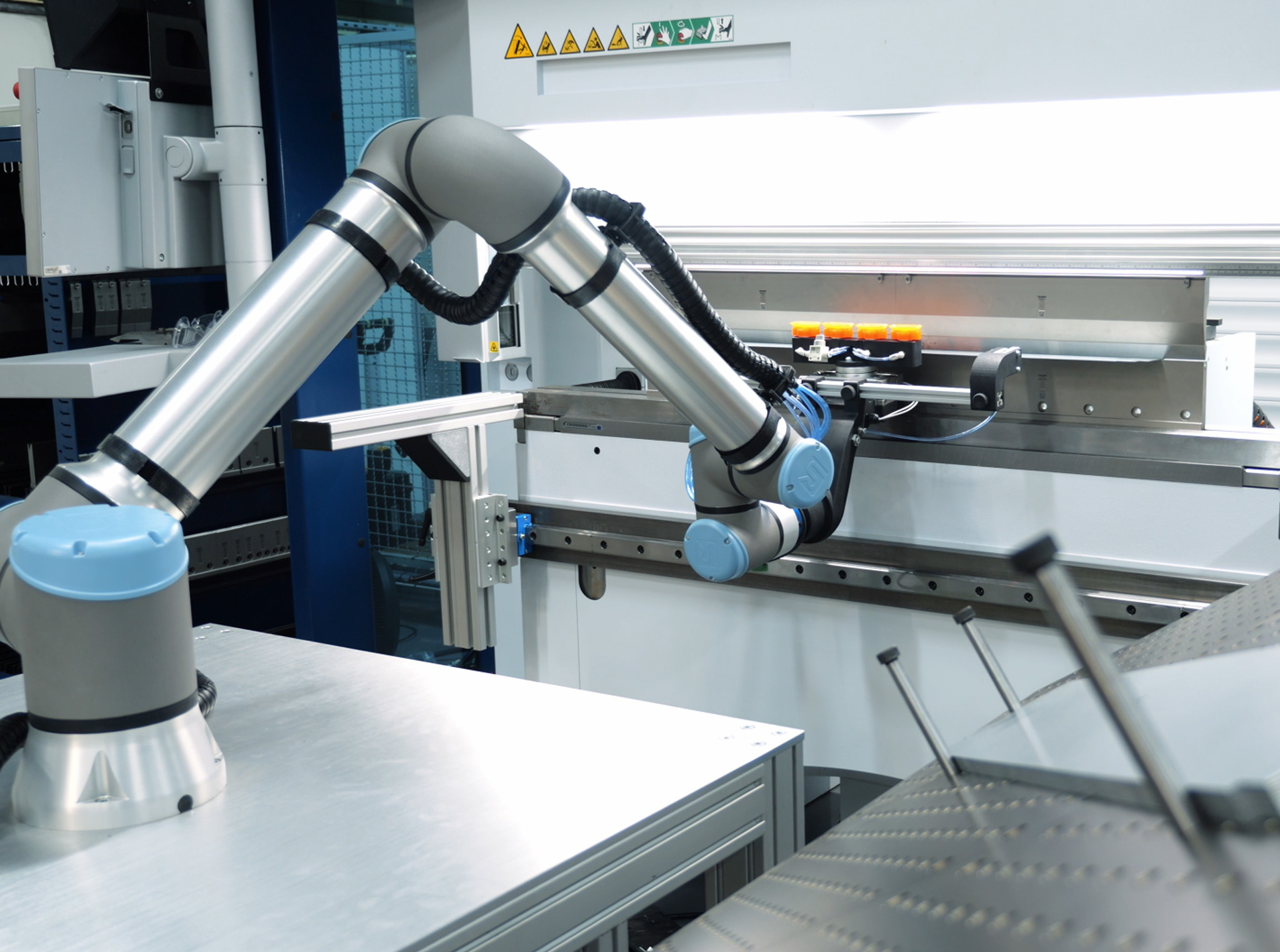













An undersized connector is one of the most common failure points we find in underperforming cobot welding cells. The wrong size creates a high-resistance bottleneck that generates intense heat, causes voltage drop, and ultimately leads to melted connectors and hours of unplanned downtime. The governing principle is simple: you must size the connector and its corresponding cable for the system's peak amperage and duty cycle, not its average power output.
Eligibility Checklist
This is not a matter of brand preference; connector sizing is dictated by the electrical and thermal physics of your specific cobot welding application. Before selecting a size, your system's electrical demands must be clearly defined. A connector that works for low-amperage sheet metal is a significant fire risk on a heavy fabrication job.
First, verify the maximum rated amperage of your welding power source and the continuous rating of your torch package. A 400A power source like a Fronius TPS 400i requires a connection capable of handling that peak current, even if your typical programs run at 200A. The connector must match the highest potential load of the system.
Second, establish the realistic duty cycle of your welding program. A process running short stitch welds at a 30% duty cycle places far less thermal load on a connector than a continuous seam weld running at a 60% or 70% duty cycle. Higher arc-on time gives the connection less time to cool, magnifying the effects of any undersizing.
Required Inputs
To correctly size your connectors and cables, you need three specific values: maximum welding amperage, the calculated duty cycle as a percentage, and the total cable run length from the power source to the cobot. Each input addresses a different failure mode.
Amperage is the primary driver of resistive heat generation within the brass pin and socket of the Dinse connector. Duty cycle determines the time available for that heat to dissipate between welds. The total cable length dictates the amount of voltage drop, which can starve the arc of power and lead to poor weld quality if the cable cross-section is insufficient.
Requirements by Scenario
The following table provides our baseline recommendations for pairing Dinse connector sizes with the appropriate welding cable cross-section based on amperage at a standard 60% duty cycle. Sizing below these minimums introduces unacceptable risk of overheating and connection failure. At Olympus Technologies, we treat these specifications as mandatory for reliable cell deployment.
| Amperage Range (at 60% Duty Cycle) | Recommended Dinse Size | Min. Cable Cross-Section | Typical Application |
| Up to 150A | 10-25 (Small Body) | 25 mm² | Light TIG, thin sheet MIG |
| 150A - 250A | 35-50 (Large Body) | 35 mm² | General MIG fabrication |
| 250A - 350A | 35-70 (Large Body) | 50 mm² | Heavy MIG fabrication |
| 350A - 500A | 50-70 or 70-95 (Large Body) | 70 mm² | High-duty cycle structural |
*Notes: Assumes standard copper welding cable. Ratings are for air-cooled systems. Always consult manufacturer specifications for your specific power source and torch.*
Common Failures
The most frequent mistake we see is sizing a connector based on the average amperage of a pulse-welding program. A pulse MIG process might average 180A, but its peaks can easily exceed 400A. Using a 35-50 connector in this scenario will cause rapid thermal degradation of the brass pin, leading to a loose connection and eventual failure.
Physical signs of an undersized connector are unmistakable. Look for thermal discolouration (a blue or brown tint) on the brass plug, melted or hardened plastic insulation around the connector housing, and a noticeable drop in arc stability. A voltage drop of just one volt at the connector can be enough to create inconsistent penetration and weld defects that fail quality control.
In a cobot system, this failure is magnified. The connection point is often part of a dress-pack mounted close to the robot arm. The excess heat generated by a failing connector can damage adjacent control cables or even melt the cobot's own protective covers, turning a simple component failure into a major repair.
Special Cases
The table above provides a solid baseline for standard DC welding processes, but it does not tell the whole story. Advanced welding waveforms, active cooling systems, and the physical constraints of a cobot arm introduce variables that require a more conservative approach to sizing. Ignoring these factors is a direct path to reduced reliability.
How does pulse MIG welding affect sizing?
Pulse MIG waveforms are not a smooth flow of current; they consist of a low background current punctuated by extremely high peak currents. These peaks, which can be more than double the machine's average amperage setting, are what cause the most thermal stress on a Dinse connection.
Our definitive rule for these applications is to size the Dinse connector and its cable for the peak current, not the average. For a process with 450A peaks, a 50-70 or 70-95 connector with 70mm² cable is the only reliable choice. This prevents the incremental heat damage at the pin's contact surface that leads to increased resistance and failure over time.
What changes with water-cooled torches?
A water-cooled torch efficiently removes heat from the torch neck and consumables, allowing for higher duty cycles at high amperages. However, this cooling circuit does absolutely nothing to cool the power cable or the Dinse connector where it plugs into the power source. The cable must still carry the full welding current.
A frequent misconception is that specifying a water-cooled torch permits the use of a smaller, lighter power cable. This is false and creates a dangerous failure point. The cable and its Dinse connector must be sized independently for the amperage and duty cycle, regardless of whether the torch itself is air-cooled or water-cooled.
How does cable length impact cobot performance?
Selecting a cable presents a trade-off between electrical performance and mechanical reality. A thicker, 70mm² cable is excellent for handling high currents with minimal voltage drop. That same cable is also heavy and stiff, which reduces the cobot's net payload and can actively fight against the robot's motion, causing path deviations.
For cable runs exceeding 5 metres from the power source to the cobot, we often specify the next size up in cable cross-section to mitigate voltage drop. But we must then carefully design the dress-pack to provide sufficient slack and strain relief. This ensures the robot's seventh axis (the arm itself) is not fighting cable stiffness, a critical step in the engineering we perform at Olympus Technologies.
Related Process Guides
Managing the main power cable is only part of the challenge in a cobot welding cell. The geometry of the torch itself is equally important for reaching joints without collisions. Our guide on special torch necks for cobot welding explains when and why a custom-angled neck is necessary to achieve optimal tool-centre-point access.
Glossary Terminology
A Dinse-style connector is a type of single-pin plug and socket used for high-current electrical connections, standardized by the Deutsches Institut für Normung. If you are new to the terminology, our article, What Is a Dinse Connector? provides a foundational overview.
Dinse is not the only connection standard used in welding. To understand how it compares to other common types in the UK and North America, see our breakdown of Dinse vs Tweco vs Euro torch connections.
Frequently Asked Questions
Can I use an adapter to fit a bigger torch cable to a smaller socket? Using an adapter is physically possible but does not solve the electrical problem. The smaller socket on the machine or feeder remains the system's bottleneck and will still overheat if the current exceeds its design rating. A connection is only as strong as its weakest point.
Does the material being welded change the Dinse size? The connector size is determined by amperage and duty cycle, not the material itself. However, certain materials indirectly influence the choice. For example, TIG welding aluminium requires high-frequency AC, which often involves higher overall current loads than DC welding steel, thus pushing you toward a larger Dinse connector to handle the demand.
What is the risk of just using the biggest size for everything? The risk is mechanical, not electrical. An over-specified 70mm² or 95mm² cable is extremely stiff and heavy. This added weight reduces the cobot's available payload for the torch and fixturing. More importantly, the cable's inherent stiffness can resist the robot's movement, causing path inaccuracies and putting long-term strain on the arm's joints and motors.
Secure Your Cobot Welding Process
Incorrect component sizing is a preventable cause of production failure. If you are planning a new cobot welding cell or are experiencing reliability issues with an existing one, our engineers can audit your complete setup. Contact Olympus Technologies today for a technical consultation to ensure your automation is built to last.