












A skilled manual painter using a high-volume, low-pressure (HVLP) spray gun typically achieves a transfer efficiency of 30% to 50%. This means for every litre of paint used, half of it ends up as overspray, waste, and exhaust filtrate. A properly integrated painting cobot pushes that transfer efficiency past 85%, directly cutting your material costs in half.
This efficiency gain is a result of absolute consistency. The cobot maintains the exact same spray distance, angle, and travel speed on every single pass. This eliminates the variables of human fatigue and technique variation that cause paint waste and quality issues over a long shift.
The Financial Impact of Rework and Throughput
Beyond material waste, the largest hidden cost of manual spraying is rework. In our experience integrating painting cells, clients report that manual rework and rejection rates can consume 15-20% of their total production time. A cobot-driven process nearly eliminates this by delivering a perfect coat path programmatically, reducing rework rates to less than 2%.
This level of consistency also makes your throughput predictable. A manual station's output can vary based on operator skill and endurance. A cobot cell, however, produces a finished part on a fixed cycle time, allowing for reliable production planning and forecasting without factoring in human variability. This is how we helped one automotive supplier go from a variable 80-100 parts per shift to a fixed 120 parts.
Head-to-Head Technical Comparison
The data clearly shows where automation provides a decisive advantage in production painting applications. The key differences lie in consistency, material use, and operator safety. This table breaks down the performance you can expect.
| Metric | Manual Spray | Automated Cobot Painting | Impact on Your Business |
| Transfer Efficiency | 30-50% | >85% | Drastically reduced paint consumption and cost. |
| Rework/Rejection Rate | 5-20% | <2% | Less wasted material, labour, and energy. |
| Throughput Consistency | Variable | Fixed Cycle Time | Predictable output for better planning. |
| Operator VOC Exposure | High (Direct) | Minimal (Indirect) | Improved safety and simplifies COSHH compliance. |
| Cost per Part | High (Variable) | Low (Fixed) | Higher profitability on every unit produced. |
Source: Olympus Technologies project data and industry benchmarks for HVLP systems.
Removing the Operator from the Hazard Zone
Manual spray painting inherently exposes operators to harmful volatile organic compounds (VOCs) and isocyanates, necessitating extensive personal protective equipment (PPE) and costly ventilation systems. This carries a significant burden of health monitoring and COSHH regulatory compliance.
An automated painting cell designed by Olympus Technologies fundamentally solves this problem. The cobot operates within a fully enclosed, interlocked, and properly ventilated booth. The operator works outside the hazard zone, loading and unloading parts safely, which simplifies compliance and creates a much healthier work environment.
When Does Manual Spray Still Make Sense?
A cobot is not the universal answer for every painting task. For true one-off custom jobs, enormous and awkward parts that exceed a robot's reach, or finishes that require genuine artistic intuition, manual spraying remains more practical. The setup and programming time for a single unique part would outweigh any efficiency benefits.
The decision hinges on a breakeven analysis between batch size, part complexity, and material cost. If you are spraying fewer than 5-10 identical items a week, or the finish requires subjective, non-repeatable strokes, manual application is likely your best bet.
What About High-Mix, Low-Volume Production?
The old belief that automation only works for mass production is outdated. Manufacturers running smaller, more varied batches worry that programming new parts will create a bottleneck, erasing any gains in spray time. This is a valid concern, but it's solved with modern software and vision systems.
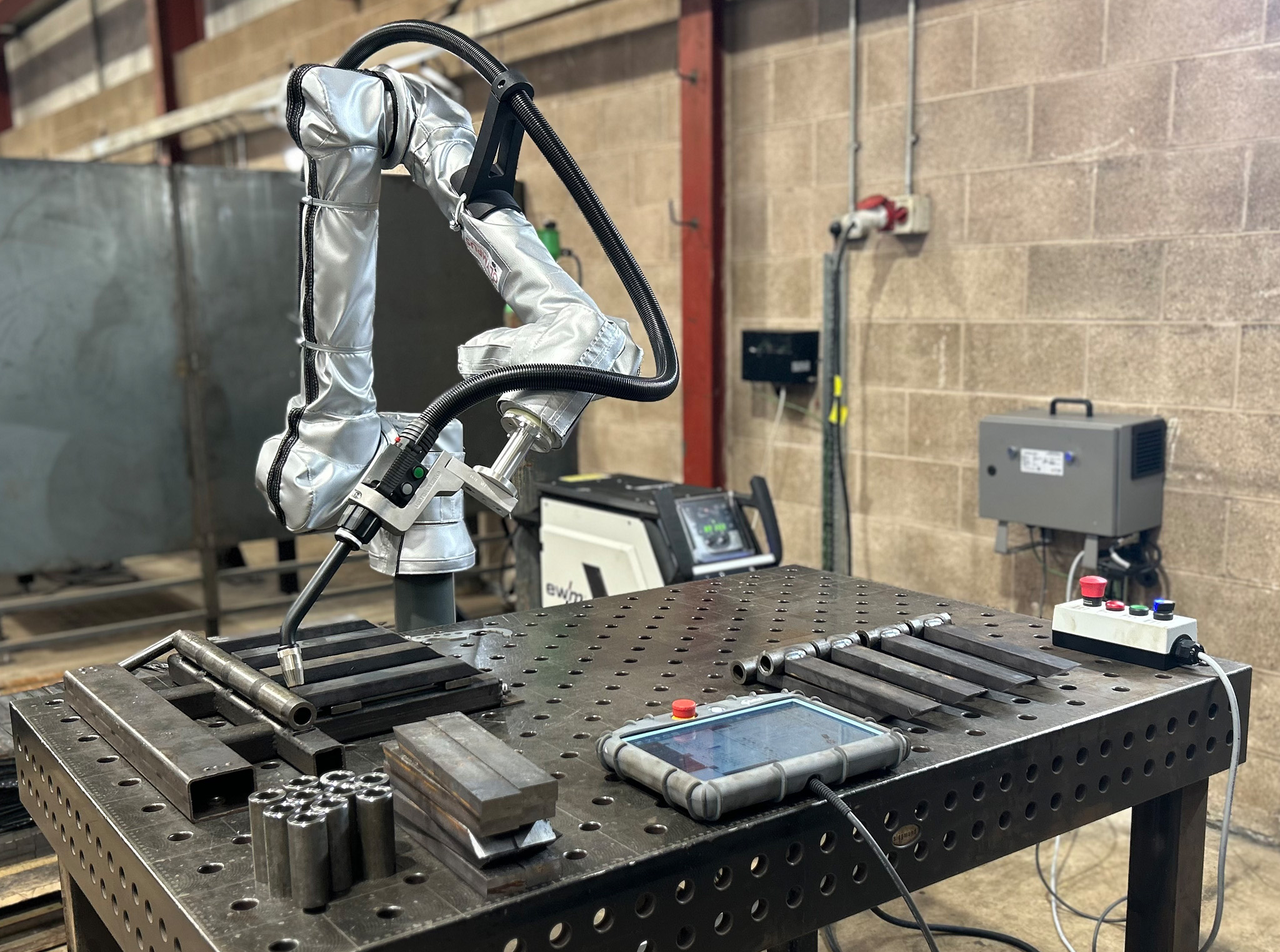
We often integrate a 2D or 3D vision system that identifies the part on the line and automatically calls the correct spray program. For new parts, an operator no longer needs complex coding. Using the cobot's teach pendant, they can guide the spray gun through the correct path once, save the program, and have it ready for production in under an hour for most components.
Can a Cobot Handle Complex Geometries?
A standard 6-axis cobot arm has a finite reach and can struggle to coat the inside surfaces or occluded areas of intricate parts. This is a common limitation we engineer solutions for. A simple robot on a pedestal cannot always replicate the dexterity of a human painter moving around a large object.
To resolve this, we mount the cobot on a 7th-axis linear track or integrate the cell with a rotary positioner that turns the part as the cobot sprays. This combination of external axes gives the system the reach and access it needs to coat all facets of a complex part in a single, uninterrupted cycle. At Olympus Technologies, we view these external axes as standard tools for solving complex painting challenges.
Frequently Asked Questions
Is a hybrid manual/cobot painting setup possible?
Yes, this is a common strategy. The cobot applies the consistent, high-volume primer and base coats where material efficiency is paramount. A skilled painter can then apply the final clear coat or custom finish manually, focusing their expertise where it adds the most value.
What's the typical payback period for a cobot painting cell?
The return on investment for a cobot painting system is driven by paint savings and reduced rework. Based on our projects, most clients see a full payback within 12 to 24 months, with high-volume operations using expensive materials often achieving it in under a year.
Can a cobot system manage specialised paints like 2K products?
Yes, but it requires a purpose-built system. Handling two-part paints with a limited pot-life involves integrating automated mixing and metering units, flow sensors, and programmed flushing cycles to prevent the material from curing inside the lines.
Next Steps and Related Guides
Ready to calculate the material savings and ROI for your specific application? Our engineers can analyse your parts and processes to provide a data-driven proposal.
- Request a complimentary consultation to get a clear financial breakdown.
- Learn more about the technical challenges of specific materials in our guide to Paint Systems on Cobots.