













Automating two-component (2K) painting with a cobot is not about speed; it's about absolute process control. We implement these systems to eliminate the variables that cause defects in manual application, turning a hazardous, skill-based task into a repeatable industrial process. This control typically reduces material waste from inconsistent mixing and overspray by 30-40%.
Managing 2K Part A & Part B: Mixing Methods
The core challenge in 2K automation is managing the resin (Part A) and hardener (Part B) at the point of application. Our systems achieve this primarily through an electronic proportioner connected directly to the end-of-arm tooling. This unit uses gear pumps or flow meters to precisely meter both components at a specific ratio, mixing them just moments before they enter the spray gun.
A simpler alternative involves a static mixer located in the fluid line just before the robot's wrist. While this lowers the initial system cost, it creates a length of tube containing mixed material that must be flushed frequently to prevent curing. This method works for long production runs but generates more solvent waste during changeovers or extended pauses.
How Automation Solves the Pot-Life Problem
Pot-life, the limited window before mixed 2K material begins to cure, is a major source of waste in manual operations. A cobot system with an electronic proportioner solves this by mixing on-demand. The system only combines the A and B components for the exact volume required for the immediate spray path, eliminating batch mixing entirely.
This means there is no "pot" of mixed paint to manage or discard. The unmixed, stable components can sit in their reservoirs indefinitely. This process ensures every part receives paint with identical chemical properties, removing the drift in viscosity and performance that happens as a manual batch nears the end of its pot-life.
ATEX Zone Classification for Cobot Painting Cells
Solvent-based 2K paints create an explosive atmosphere, requiring strict adherence to ATEX or DSEAR regulations in the UK. The area immediately around the part being sprayed is typically classified as Zone 1 (high risk). Standard cobots like the Universal Robots UR10e are not ATEX-rated and cannot operate inside this zone.
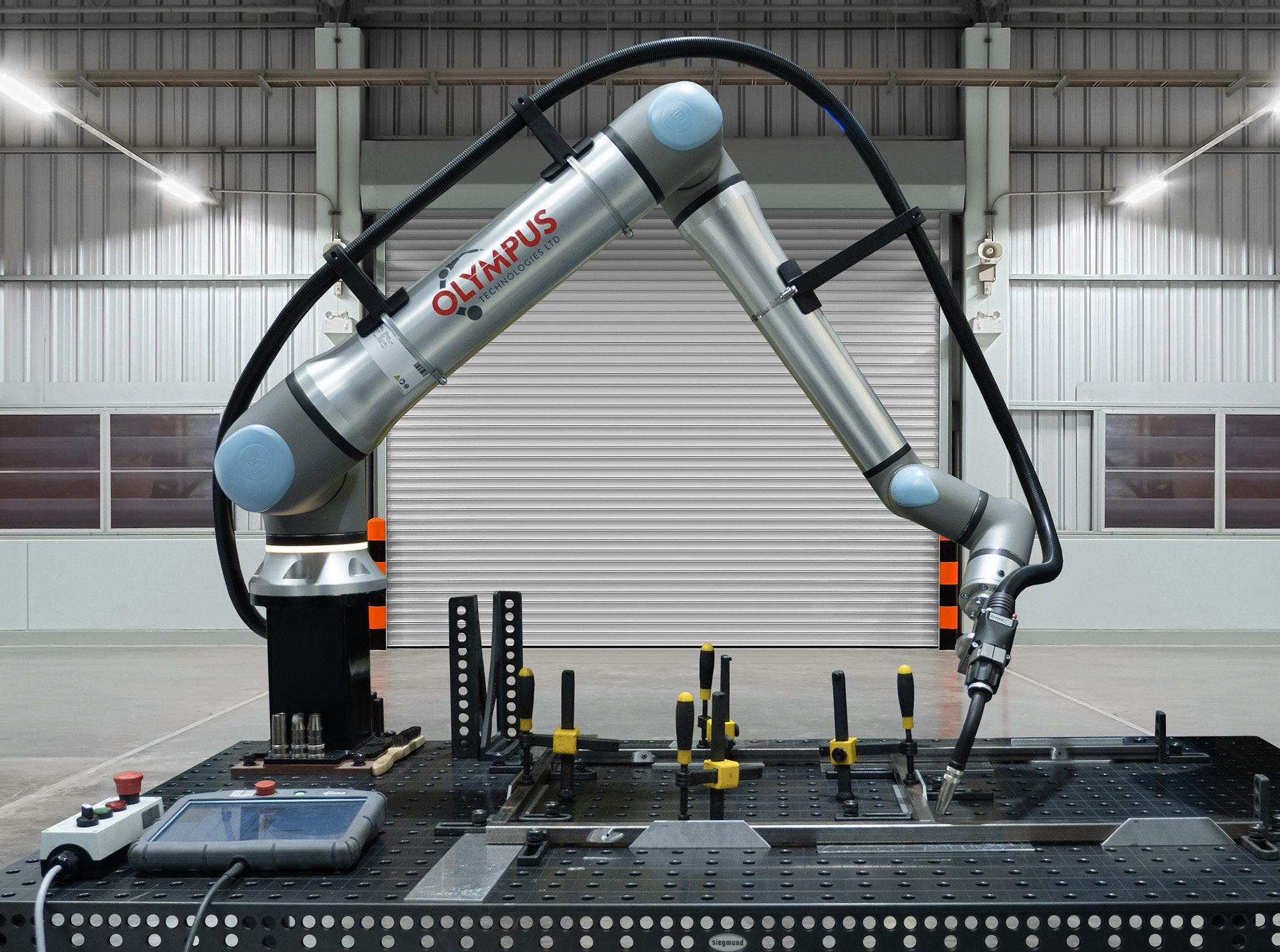
Our solution is to position the cobot base and controller in a designated safe area outside the spray booth. The cobot's arm reaches into the Zone 1 environment through a sealed aperture. The spray gun, fluid lines, and any sensors on the end-of-arm tooling must be certified for Zone 1 operation.
Programming a Cobot for 2K Painting
Achieving a flawless Class-A finish requires more than just moving the gun. We program the cobot to maintain a constant Tool Centre Point (TCP) speed across the entire part geometry, ensuring a uniform film thickness that is impossible to achieve by hand. Pathing is programmed to trigger the gun only when it's over the part, drastically cutting overspray.
The dispenser and proportioner are controlled via the cobot's digital I/O, often integrated using a dedicated URCap. This allows the master program to manage pre-charge and post-purge fluid cycles automatically. For complex 3D surfaces, we use offline programming software to generate smooth, efficient toolpaths directly from a CAD model of the part.
When is a Full 2K Cobot System Overkill?
The durability and chemical resistance of a 2K coating are essential for applications like automotive bodywork, aerospace components, and marine hardware. That said, the added system complexity of a proportioner, ATEX-rated peripherals, and advanced safety controls is not always necessary. A full 2K system adds significant cost and engineering overhead compared to simpler coating methods.
For many manufactured goods, a less complex single-component paint or powder coat provides sufficient protection. Before specifying a 2K system, we always evaluate the part's end-use environment and the client's actual durability requirements. A simpler process often provides a much faster return on investment.
How do single-component (1K) systems compare?
Single-component, or 1K, systems use paints like air-dry enamels or lacquers that cure through solvent evaporation without a chemical catalyser. This makes the automation process vastly simpler. The system consists of a pressure pot, a fluid line, and a spray gun, with none of the mixing ratios or pot-life constraints of 2K.
Cobot cells for 1K painting are less expensive and faster to deploy. They are an ideal fit for finishing interior-use metal parts, plastic enclosures, or wooden components where high resistance to UV, chemicals, or abrasion is not a primary concern. Understanding this trade-off is key to right-sizing your investment in automated painting systems.
Is specialised conformal coating different?
Yes, conformal coating is a distinct discipline, even though it can use 2K materials like silicones or urethanes. The goal is not cosmetic finish but the precise electrical insulation of Printed Circuit Boards (PCBs). These systems prioritise bead control and selective coating over broad surface coverage.
While a cobot is the platform for both, the end-of-arm tooling for conformal coating involves micro-valves and vision systems designed for extreme precision. The programming focuses on achieving a specific film thickness, often measured in microns, to protect sensitive electronics without interfering with components. This type of application requires a different set of validation and quality control processes.
Automated 2K System Components: A Breakdown
A successful 2K cobot painting cell integrates several key technologies beyond just the robot arm. Each component must be specified to handle the materials and meet the required safety standards for the environment. At Olympus Technologies, we design these systems ensuring every part works in concert.
The table below outlines the typical components and their function within the cell.
| Component | Function | Key Consideration |
| UR10e Cobot | Provides 6-axis motion for the spray gun. | Reach (1300 mm) must cover the largest part. |
| Electronic Proportioner | Meters and mixes Part A and Part B materials. | Must have a ratio accuracy of ±1% for consistent cure. |
| ATEX Spray Gun | Atomises and applies the mixed material. | Must be certified for the specific ATEX zone (e.g., Zone 1). |
| Heated Fluid Lines | Maintain material viscosity from drum to gun. | Essential for consistent flow rate, especially in colder shops. |
| Dosing Pumps | Feed material from bulk containers to the proportioner. | Must be compatible with the chemical properties of the paint. |
| System PLC | Manages safety interlocks and overall cell logic. | Provides master control over the cobot, dispenser, and booth. |
| Fume Extraction | Removes solvent vapours and overspray from the cell. | Must meet COSHH and LEV requirements for operator safety. |
Data based on typical system architecture for solvent-based 2K materials.
Frequently Asked Questions about 2K Cobot Painting
How do you handle flushing and colour changes?
We automate this with purge or flush cycles programmed into the cobot's routine. At the end of a batch, the system automatically runs a set volume of solvent through the mixer and gun into a designated waste container. For colour changes, this process is repeated until the lines are clean, though for frequent changes, a dedicated system per colour is more efficient.
What is the typical cost of a 2K cobot painting cell?
A turnkey 2K painting cell from Olympus Technologies typically ranges from £70,000 to £120,000. This is higher than a standard dispensing system due to the cost of the electronic proportioner, ATEX-rated components, and the required safety enclosure with certified fume extraction. The final price depends on part complexity and the level of integration required.
Can a standard Universal Robots cobot operate in an ATEX zone?
No. The cobot's base, controller, and teach pendant are not certified for explosive atmospheres. The robot must be physically located in a safe area, with only its arm and ATEX-rated end effector passing through a sealed opening into the hazardous zone. This is a critical design principle for ensuring compliance and safety.
Next Steps & Related Guides
Controlling the complex variables of 2K painting is a formidable automation challenge. When executed correctly, it delivers unparalleled consistency and material savings.
If you're ready to eliminate the inconsistencies of manual 2K application, contact our engineering team to book a technical consultation on your specific parts and process.