













How to identify the five critical signals that your MIG or TIG welding shop is ready for a cobot cell to improve throughput and quality.
Primary Indicators of Cobot Welding Readiness
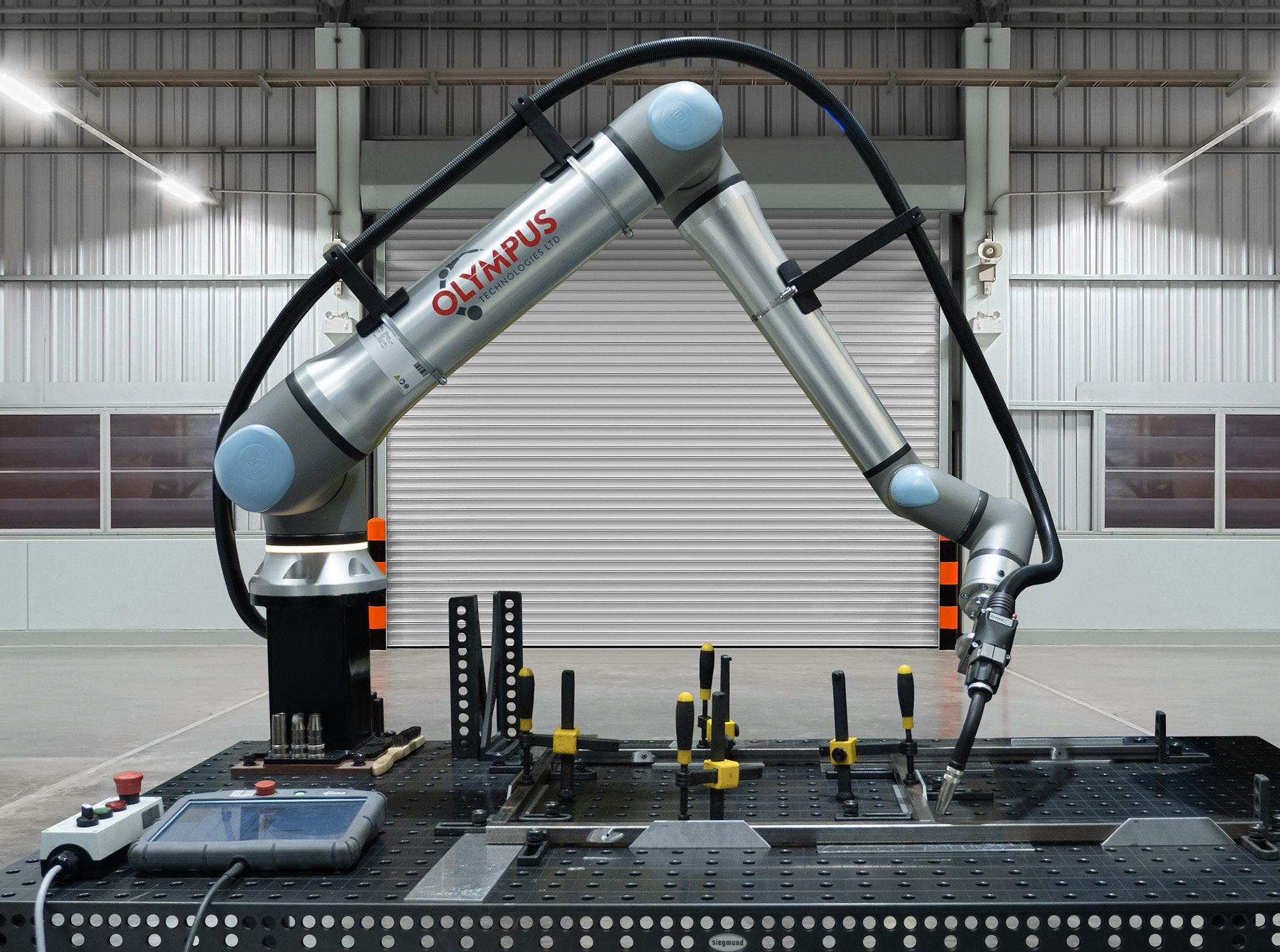
A fabrication shop is ready for a cobot welding cell when skilled welders spend more than 40% of their shift performing repetitive, linear MIG or TIG runs on mild steel, stainless steel, or aluminium parts. Manual labour shortages, inconsistent weld quality on large batches, and a backlog of sub-assemblies typically trigger the transition to automated 6-axis collaborative arms. These systems operate alongside staff under BS EN ISO 10218-1/2 safety standards, requiring no high-cost safety fencing in many low-speed configurations.
1. High Volume of Repetitive Straight-Line Fillet Welds
Automation delivers the highest ROI when applied to repetitive welds between 50mm and 1000mm in length. If your production schedule involves welding the same box sections, frames, or brackets for several hours per day, a cobot maintains 0.03mm repeatability that a human operator cannot match over a full 8-hour shift. We observe that shops transition successfully when they have at least 15-20 identical units per batch, allowing for efficient jig loading and unloading cycles.
2. Difficulty Recruiting and Retaining Skilled MIG/TIG Coders
The UK manufacturing sector faces a persistent shortage of coded welders. When your highest-paid staff spend their time on simple flat-position welds rather than complex, high-value fabrications, your margin per hour decreases. A cobot cell allows a junior operator to manage the welding of standard parts, freeing your coded welders to focus on bespoke projects, heavy structural work, or intricate TIG assemblies. This shift in labour allocation typically improves shop floor morale by removing the monotony of high-volume production tasks.
3. Inconsistent Weld Quality or High Post-Weld Cleanup Costs
Excessive spatter and inconsistent penetration lead to high ‘grinding time’ costs. A cobot controlled via a precise interface, such as the Universal Robots Polyscope, maintains constant travel speed and wire feed rates. This consistency reduces post-weld dressing time by up to 70%. If your floor suffers from bottlenecks at the grinding station, the root cause is often manual weld variance that a robotic torch eliminates by maintaining a specific torch angle and work-to-distance ratio.
4. Space Constraints Prohibiting Large Industrial Robot Cells
Traditional industrial welding robots require massive safety interlocked cages, light curtains, and dedicated floor space often exceeding 20 square metres. A collaborative welding cell typically fits within a 2m x 2m footprint. If your shop layout is fixed and you cannot move heavy machinery to accommodate a large fence, the cobot is the viable technical alternative. The ability to move the cell via pallet jack or integrated castors allows for flexible deployment across different work cells as production demands shift.
5. Growing Backlog of Low-to-Medium Complexity Parts
When the lead time for sub-assemblies exceeds five working days, the shop floor requires a capacity injection. A cobot does not require breaks and can be programmed to run ‘lights-out’ for short periods or across multiple shifts with a basic jig change. We calculate that a single cobot cell often matches the output of two manual welders for specific part geometries, providing a predictable throughput rate that simplifies production planning and customer lead time estimations.
Transitioning from Manual Layouts to Automated Cells
Moving from a manual bench to a robotic cell requires an audit of your current jigging and part fit-up accuracy. While a human welder can compensate for a 2mm gap or a slightly misaligned plate, a cobot follows a pre-defined path. Readiness therefore involves ensuring your upstream cutting and folding processes provide consistent tolerances to the welding bay. This necessitates a look at how parts are presented and whether your current tooling supports rapid changeovers for low-mix, high-volume production cycles.
Frequently Asked Questions
Which welding processes can be automated with a cobot?
We integrate MIG, TIG, and fibre laser welding systems into collaborative cells. MIG is the most common for structural steel and general fabrication, while TIG is preferred for thin-gauge stainless steel and aluminium where aesthetic finish is paramount. Laser welding offers the highest speed and lowest heat input, often eliminating the need for any post-weld grinding.
What is the typical ROI for a UK welding shop?
Most UK fabricators see a return on investment within 12 to 18 months. This calculation includes the reduction in rework, lower gas and wire wastage, and the ability to run multiple shifts without increasing the headcount of highly skilled coders. The cost per metre of welding significantly decreases due to the constant travel speed and optimised arc-on time.
Do I need to be a programmer to use the cell?
Modern cobot welding software uses ‘lead-through’ programming. An operator physically moves the robot arm to the start and end points of a weld and saves the position via a button press on the torch or a tablet interface. No traditional coding knowledge is required, meaning a welder can become a robot operator within one day of training.
Related Technical Guides
For further technical detail on specific welding methods, consult our guide on MIG welding cost per metre or examine the trade-offs in our MIG vs TIG decision guide. If your work involves thin-gauge materials where zero-grinding is the goal, our analysis of laser welding vs TIG provides specific cycle time comparisons.