













Welding environments can be extremely demanding on collaborative robots. Weld spatter, heat, grinding dust and airborne contaminants can all contribute to increased maintenance requirements and premature wear if robots are left unprotected.
Choosing the right welding cover helps protect your robot from these harsh conditions, extending equipment lifespan and reducing costly downtime. However, not all welding covers are the same. The ideal solution depends on your welding process, operating environment and the level of protection required.
Why Use a Welding Cover?
A welding cover acts as a protective barrier between your robot and the surrounding environment. Designed to fit directly onto the robot arm, the cover helps shield critical components from damage caused by heat, contamination and weld spatter.
Benefits of using a welding cover include:
- Protection against weld spatter
- Reduced contamination from dust and debris
- Improved resistance to heat exposure
- Lower maintenance requirements
- Reduced cleaning time
- Extended robot service life
- Reduced unplanned downtime
For manufacturers relying on robotic welding, protecting the robot can help improve long-term reliability and reduce operating costs.
Consider Your Welding Process
The first step when selecting a welding cover is understanding the demands of your application.
MIG Welding
MIG welding typically generates significant weld spatter and heat. Covers used in MIG applications should be manufactured from durable, heat-resistant materials capable of withstanding regular exposure to molten metal particles.
For high-duty-cycle production environments, enhanced spatter resistance is often a priority.
TIG Welding
TIG welding generally produces less spatter than MIG welding but still exposes the robot to elevated temperatures and airborne contaminants.
In these environments, covers help protect robot surfaces and moving components while maintaining cleanliness and reducing contamination risks.
Assess Your Working Environment
The welding process is only part of the equation. The surrounding workshop environment also plays an important role when selecting a protective cover.
Fabrication Workshops
Fabrication facilities often combine welding, grinding and cutting operations. These processes generate abrasive dust and debris that can accumulate around robot joints and moving components.
Heavy Manufacturing
High-volume manufacturing environments may expose robots to prolonged heat, continuous production cycles and increased levels of contamination.
Mixed Production Areas
Some facilities use robots across multiple applications. In these environments, protection may be required not only from welding but also from oils, coolants, cleaning chemicals and general industrial contamination.
Choosing the Right Material
Different applications require different levels of protection.
Silicone
Silicone covers offer excellent heat resistance and flexibility, making them a popular choice for many robotic welding applications.
Kevlar
Kevlar-based materials provide outstanding resistance to heat, abrasion and weld spatter, making them suitable for demanding industrial environments.
PTFE
PTFE materials offer excellent chemical resistance and are often selected for applications where contamination control is important.
Hypalon
Hypalon provides strong abrasion resistance and durability in environments where robots are exposed to dust, debris and mechanical wear.
The most suitable material depends on your welding process, operating conditions and protection requirements.
Why Robot Model Matters
A welding cover should be designed specifically for the robot it is protecting.
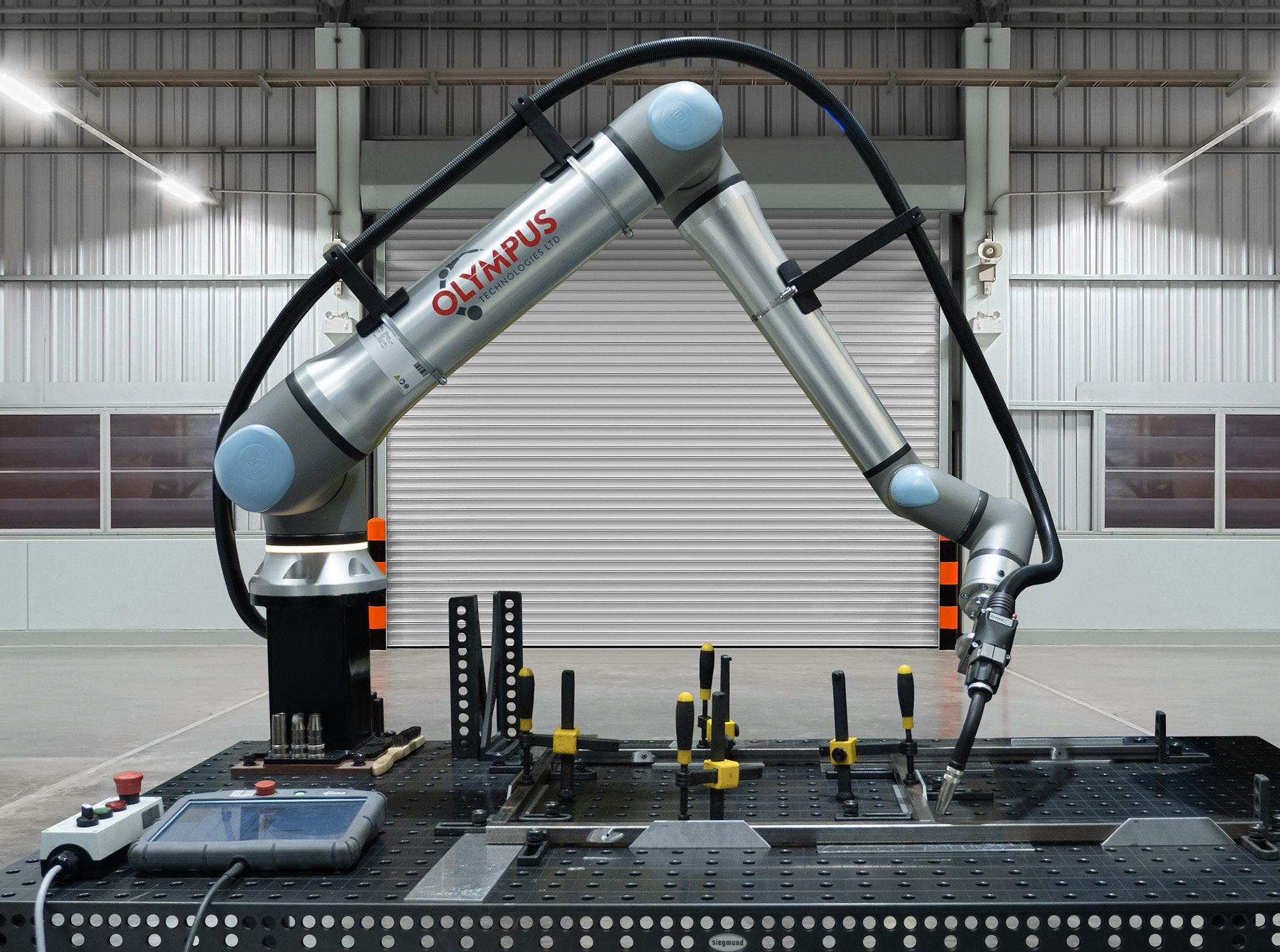
Olympus Technologies manufactures welding covers for Universal Robots collaborative robots, ensuring each cover is tailored to the exact dimensions and movement of the robot. A correctly fitted cover allows full freedom of movement while maintaining protection throughout the robot's working range.
Whether protecting a UR5e, UR10e or UR20, a custom-designed cover helps ensure reliable performance without compromising productivity.
Custom-Fitted vs Generic Covers
While generic protective covers are available, a custom-fitted solution offers significant advantages.
A cover designed specifically for the robot model and application provides:
- Better protection around joints and moving sections
- Improved durability
- Reduced risk of snagging or interference
- Full compatibility with welding torch packages and cable routing
- Consistent protection throughout the robot's working envelope
For demanding welding environments, a custom solution typically delivers the best long-term performance.
Maintaining Your Welding Cover
Like any protective component, welding covers should be inspected regularly for signs of wear.
Routine inspections help identify:
- Spatter build-up
- Abrasion damage
- Tears or punctures
- Excessive heat exposure
Replacing a worn cover is significantly more cost-effective than repairing damage to the robot itself.
Frequently Asked Questions
Do welding covers affect robot movement?
No. Properly designed welding covers are engineered to move with the robot while maintaining full articulation and performance.
Can welding covers be used with MIG and TIG welding?
Yes. Welding covers can be tailored to suit both MIG and TIG applications, with material selection based on the specific operating conditions.
How long do welding covers last?
Service life varies depending on the environment, welding process and exposure levels. Regular inspection helps maximise cover lifespan and maintain protection.
Are welding covers only used for welding?
No. Protective robot covers are also widely used in painting, spraying, machine tending and other industrial applications where contamination or environmental exposure is a concern.
Protect Your Universal Robots Cobot with Olympus Technologies
Protecting your collaborative robot from weld spatter, heat and contamination is essential for maintaining performance and reducing downtime. Olympus Technologies manufactures high-quality welding covers specifically for Universal Robots, helping manufacturers protect their automation investment in demanding welding environments.
Contact our team today to discuss your application and find the right welding cover for your Universal Robots cobot.