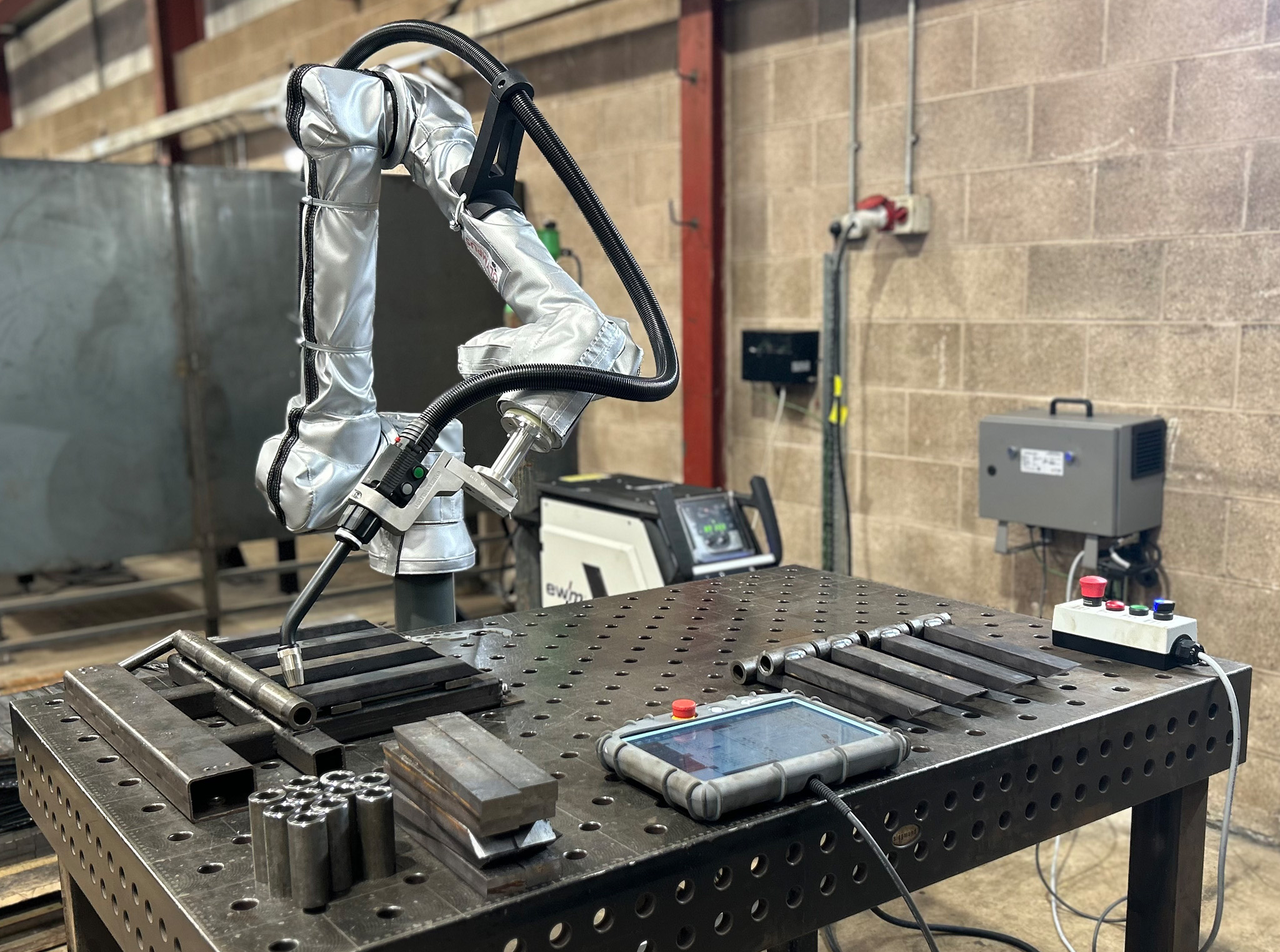














Compare cobot machine tending vs manual loading for CNC mills and lathes. Technical analysis of ROI, cycle times, PUWER safety, and UK manufacturing costs.
Direct Comparison of Operational Throughput
Cobot machine tending increases CNC spindle utilisation to 85% or higher, compared to the 50-60% typically achieved with manual loading. Manual operators face fatigue, distractions, and required breaks which create significant spindle idle time during shifts. A cobot maintains consistent 15-second loading cycles without variation over a 24-hour period. Our deployments across UK machine shops show that single-shift operations often transition to ‘lights-out’ evening runs, effectively doubling production capacity without additional headcount.
Manual loading requires one operator per two machines at maximum efficiency for high-volume parts. Cobots allow one skilled engineer to supervise five or more automated cells. This shift changes the labour cost from a variable expense per part to a fixed capital depreciation cost. CNC machine uptime is the primary driver of profitability in precision engineering. When a lathe sits idle for 5 minutes every hour due to manual loading delays, the factory loses 40 hours of potential revenue per year per machine.
Cycle Time and Repeatability Analysis
Consistency in part placement directly impacts tool wear and scrap rates. Manual loading introduces variables in how a part is seated against the locating pins or chuck jaws. A Universal Robots UR10e cobot achieves a pose repeatability of +/- 0.03mm. This precision ensures the workpiece is seated correctly every time, reducing the risk of machining errors caused by slight misalignments. High-speed manual loading often results in debris being trapped between the part and the fixture; cobots integrated with air-blast systems clear the surface during every cycle.
Labour Costs and Recruitment Realities in the UK
Attracting and retaining manual loaders for CNC machines is increasingly difficult in the UK manufacturing sector. Typical hourly rates for machine operators range from £12 to £18 depending on region. A double-shift operation (16 hours per day) incurs over £50,000 in annual labour costs per machine. Cobot cells have a typical capital outlay between £60,000 and £90,000 including the robot, gripper, and integration. Most UK workshops achieve a full return on investment (ROI) within 12 to 18 months by eliminating the recruitment overhead and training costs associated with high staff turnover.
Technical Integration and CNC Communication
Automation requires a direct interface between the robot controller and the CNC control (Fanuc, Siemens, or Heidenhain). Manual loading relies on human observation of the ‘cycle finish’ light. Cobots use digital I/O or industrial Ethernet protocols to communicate with the machine tool. The robot sends a signal to open the automatic door, the CNC confirms the spindle is stopped, and the robot performs the swap. For older machines without automatic doors, we install pneumatic door actuators to enable full automation. This eliminates the physical strain on operators who would otherwise open and close heavy machine doors up to 300 times per shift.
Part Presentation and Fixturing Requirements
Manual loading is flexible because humans can pick parts from a jumbled bin. Cobots require organised part presentation. We utilise tray systems, gravity feeders, or vision systems to ensure the robot finds the workpiece. A standard 600mm x 400mm grid tray can hold 50 to 100 small components, allowing the machine to run for hours unattended. Transitioning from manual to automated loading requires a one-time investment in these part-holding systems, but this setup allows for predictable production schedules that manual loading cannot match.
Bridging Manual Shop Floor Flexibility with Robotic Reliability
Moving from manual loading to automated cobot cells requires a shift in how factory managers view the production floor. While a human operator can quickly pivot between different tasks, a cobot provides the rigid structure needed for high-quality, high-volume output. We bridge this gap by designing modular grippers and easy-to-use software interfaces that allow existing staff to reprogram the robot for new parts in under 15 minutes.
Frequently Asked Questions
What is the typical ROI for a CNC cobot cell in the UK?
Most CNC machine shops see a payback period of 12 to 18 months. This calculation includes the reduction in direct labour costs and the increase in spindle hours per month. For machines running three shifts, ROI is often achieved in under 9 months.
Can cobots handle heavy workpieces for turning centres?
Yes, cobots like the Universal Robots UR20 can handle payloads up to 20kg. For heavier parts, we integrate specific end-of-arm tooling that uses pneumatic clamps to ensure secure handling during high-speed movements.
Is a cobot safe to use without guarding next to a manual operator?
Safety is governed by BS EN ISO 10218-1/2 and ISO/TS 15066. We conduct a full PUWER risk assessment for every deployment. While cobots can work without fences, the inclusion of a CNC machine often requires additional safety scanners or light curtains to protect against the high-speed rotating spindle and swarf risks.
How long does it take to switch the robot between different parts?
Using quick-change gripper fingers and saved program templates, a changeover typically takes 5 to 15 minutes. This makes cobots suitable for high-mix, low-volume (HMLV) production environments that were previously restricted to manual loading.