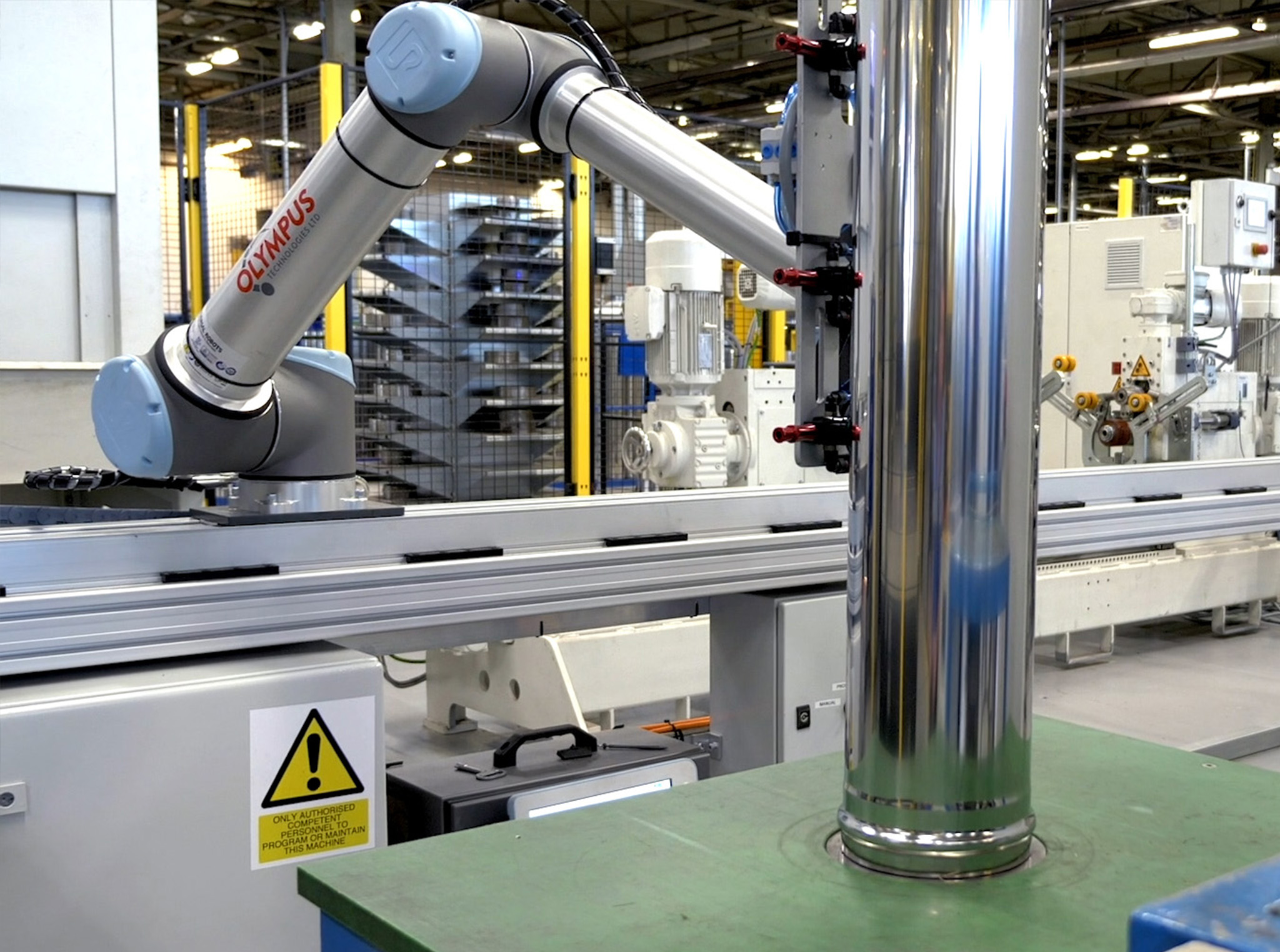














For many manufacturers, automation is no longer a question of if, but when. Rising labour costs, pressure on production capacity, and the need for long term gains are forcing decision makers to evaluate automation investments more carefully than ever.
This practical framework is designed to help manufacturing leaders assess automation opportunities, calculate ROI, and make data driven decisions that balance upfront investment with long term value.
The First Question Decision Makers Should Ask
Before selecting an automation solution, the most important step is gaining a clear understanding of the business problem.
Automation is not a single project or technology. It is an investment decision that affects productivity, employees, maintenance, and long run competitiveness.
The most successful automation initiatives start by aligning automation with business goals, not equipment.
Signs You Are Ready to Automate Your Production Line
Many manufacturers reach a tipping point where manual tasks become time consuming, expensive, or difficult to scale.
Common signals include:
- Rising labor costs, overtime creep, or difficulty retaining skilled employees
- Quality variation caused by human error, leading to rework and higher production costs
- Bottlenecks that cap production capacity even when demand exists
- Repetitive tasks that impact safety or cause strain injuries
- Increasing production costs driven by inefficiency rather than volume
- Inability to meet lead times without adding shifts
If several of these key factors apply, automating part of your production process may already be the most cost effective option.
The first step does not need to be complex. Even a short assessment can highlight where automation investments are most likely to deliver savings.
What Automation Can Deliver and Where It Falls Short
Understanding both benefits and limits is essential for sound decision making.
Where Automation Creates the Most Value
Automation delivers strong financial impact when applied to:
- Repetitive, well defined tasks with stable inputs
- Processes where defects are costly and improved product quality matters
- Manual tasks that limit productivity or introduce variability
- Operations where increased efficiency directly reduces cost per unit
In these cases, automated systems reduce production costs, support smart factories, and generate long term savings that outweigh the initial investment.
Where Automation Is Usually a Poor Fit
Automation often underperforms when:
- Parts vary significantly with no standard presentation
- Existing systems or upstream processes are unstable
- There is no internal support or maintenance capability
Automation amplifies process quality, good or bad. Stabilising the process first often delivers better long term value.
A Five Step Practical Framework for Automation Decisions
This framework helps manufacturers evaluate automation projects objectively, using data rather than instinct.
Step One: Define the Business Objective
Every automation project should be anchored to a measurable outcome, such as:
- Cost reduction or labor savings
- Increased throughput or production capacity
- Improved product quality and traceability
- Reduced safety incidents
- More predictable delivery performance
Without this clarity, it becomes difficult to evaluate return on investment or justify the upfront price.
Step Two: Identify Automation Opportunities
Focus on processes that create the most friction.
List your top five problem areas, then gather basic operational data:
- Cycle time
- Scrap and rework levels
- Staffing per shift
- Downtime and changeover losses
- Demand stability
This creates a clear understanding of where automation solutions align best with operational needs.
Step Three: Evaluate Feasibility Versus Impact
A structured comparison helps prioritise automation investments.
Automation Opportunity Scorecard
| Task | Volume stability | Part variation | Quality impact | Safety risk | Integration effort | Automation ROI | Priority |
|---|---|---|---|---|---|---|---|
| Palletising | High | Low | Medium | Medium | Low | Strong | High |
| Machine tending | High | Medium | High | Medium | Medium | Strong | High |
| Inspection | Medium | Low | High | Low | Medium | Moderate | Medium |
| Packing | Medium | Medium | Medium | Low | Low | Moderate | Medium |
| Kitting | Low | High | Medium | Low | High | Weak | Low |
This step ensures automation initiatives focus on tasks with the best balance of impact and feasibility.
Step Four: Build the Automation Business Case
A strong business case looks beyond the upfront costs.
Costs involved typically include:
- Equipment and automation systems
- Integration with existing systems
- Safety compliance and guarding
- Employee training
- Maintenance, spares, and technical support
Benefits often include:
- Labor savings through redeployment
- Reduced scrap and lower production costs
- Increased throughput and productivity
- Long term gains from consistency and scalability
When calculating automation ROI, many manufacturers aim for a payback period of 12 to 24 months, but this depends on volume, labor costs, and complexity.
ROI Inputs and Measurement
| Input | How to measure | Data source | Notes |
|---|---|---|---|
| Labor savings | Hours redeployed | Shift data | Exclude redeployed value twice |
| Scrap reduction | Yield improvement | Quality data | Use rolling averages |
| Uptime gains | OEE change | Production reports | Remove ramp up period |
| Capacity increase | Units per shift | ERP data | Demand must exist |
This approach supports better investment decisions and a clearer view of total cost of ownership. TCO includes not just the initial investment, but long term costs such as maintenance, energy, and support.
Step Five: Reduce Risk With a Pilot and Scale
Pilots reduce uncertainty and protect capital.
A typical pilot automation project includes:
- Defined scope and acceptance criteria
- Factory and site acceptance testing
- A structured ramp up plan
- Documentation and training handover
Once proven, successful automation initiatives can be replicated across the production line, improving scalability and long run efficiency.
Automation Solutions Available to Manufacturers
Modern manufacturing rarely relies on a single technology.
Common automation solutions include:
Robotic Cells
Used for handling, machine tending, palletising, and repetitive production tasks.
Vision Inspection and Quality Automation
Reduces defects, supports improved product quality, and limits human error.
Intralogistics and Material Flow
Conveyors, buffering, and mobile robots improve flow and reduce internal transport time.
Controls and Data Integration
PLC, HMI, and traceability systems support smart factories and data driven decisions.
Real World Costs and Common Blockers
Hidden Costs That Impact ROI
Automation investments often underestimate:
- Safety validation time
- Tooling and fixturing changes
- Production line modifications
- Ongoing support and maintenance
- Change management for employees
Planning for these upfront costs protects the long term value of the automation investment.
Common Barriers and How to Address Them
High variation often requires standardisation.
Lack of data can be solved with a short baseline study.
Limited internal support can be addressed through training and service agreements.
Support, Maintenance, and Long Term Performance
What Strong Support Looks Like
Effective automation support includes:
- Remote diagnostics and response times
- Preventive maintenance schedules
- Clear escalation paths
- Spare parts strategy
Training Your Workforce
Automation succeeds when employees are confident.
Operator training should cover normal operation and recovery.
Technician training should focus on fault finding and basic maintenance.
This protects productivity and reduces long term costs.
Case Studies and Measurable Outcomes
Manufacturers applying this framework commonly achieve:
- Cost savings through reduced manual work
- Increased efficiency without adding shifts
- Improved product quality and consistency
- Strong return on investment over the long run
Detailed examples help decision makers assess relevance for their own industry and systems.
Frequently Asked Questions
How do I know when automation makes financial sense?
When labor costs, quality losses, or capacity limits exceed the cost of automation over time.
What data is needed to calculate ROI?
Cycle time, staffing, scrap rates, downtime, and demand forecasts.
How long does an automation project take?
Most projects complete within 8 to 16 weeks depending on scope and complexity.
What is the difference between a cobot and industrial automation?
Cobots suit shared spaces and flexibility. Industrial automation supports higher speed and payload.
What happens after implementation?
Ongoing support, maintenance, and continuous improvement protect long term gains.
Next Step: Assess Your Automation Opportunity
You do not need perfect data to begin.
Optional inputs include:
- Part photos or short videos
- Approximate cycle time
- Shift pattern and staffing
A short assessment helps determine whether automating a task will deliver savings, improve efficiency, and create long term value.
Contact Olympus Technologies for a no-obligation consultation, product demonstration, or to request a quote tailored to your production requirements.