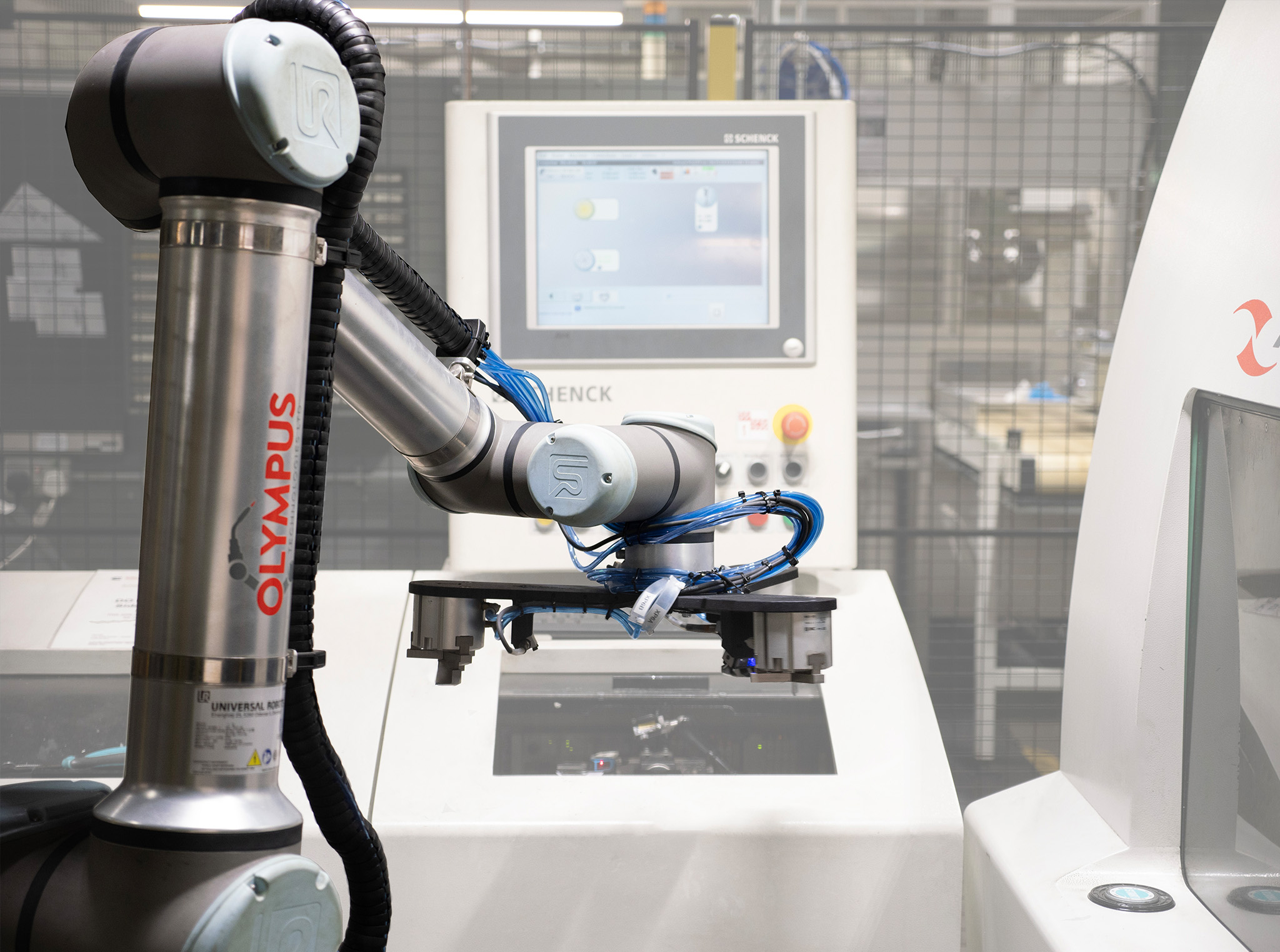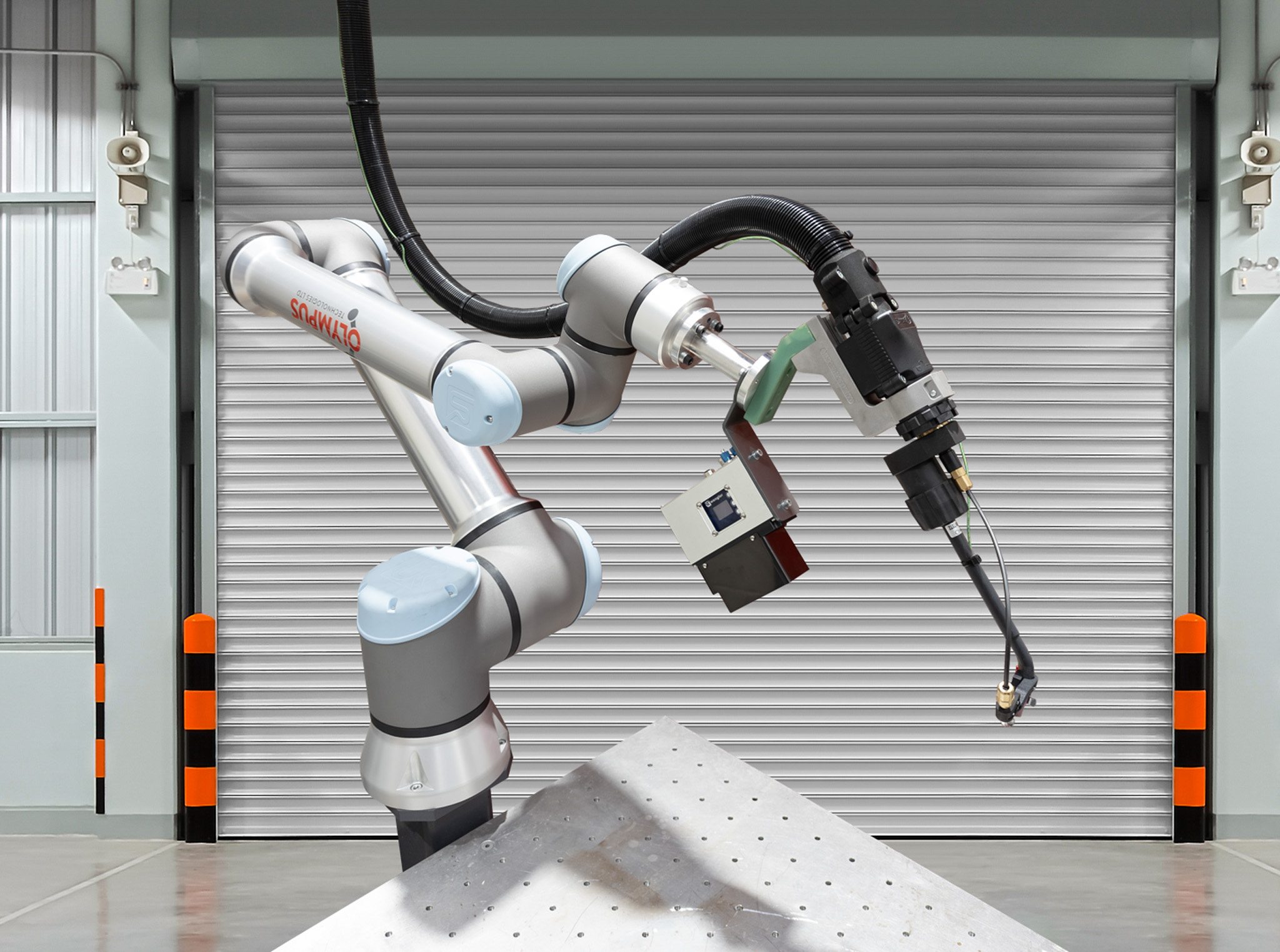













As a specialist Robotics and Automation Integrator, Olympus Technologies provides automated welding systems that address the UK manufacturing skills gap by increasing arc-on time. Welding automation involves the use of collaborative robots (cobots), industrial robots, and fixed mechanised systems to perform MIG, TIG, and laser welding tasks. These systems operate continuously without fatigue-related pauses, ensuring consistent weld bead geometry across production batches.
This page covers robotic and collaborative welding integration, hardware configurations, and system comparisons. It does not cover manual welding techniques, submerged arc welding, or resistance spot welding.
Value Proposition
Automating welding processes allows manufacturers to redeploy skilled manual welders to high-value bespoke tasks while the robot handles repetitive production runs. This transition results in higher throughput and reduced consumable waste due to precision wire placement and optimised gas shielding.
Measurable Outcomes
The primary performance indicator for welding automation is the increase in the arc-on factor. The improvement in arc-on time relative to manual welding depends on the efficiency of the part loading cycle and the complexity of the weld programme.
How it Works (Process)
The integration process begins with a technical assessment of part geometry and material types. A Robotics and Automation Integrator then designs the welding jig and selects the appropriate power source. Once the robot is programmed with specific weld parameters (voltage, travel speed, and wire feed), the system undergoes a trial run to verify penetration and bead appearance before full production.
What's Included / Not Included
Standard systems include the robot arm, controller, welding power source, wire feeder, and torch package. Systems do not include initial gas bottles or bulk wire drums unless specified, and non-destructive testing (NDT) of finished parts remains the responsibility of the manufacturer's quality department.
Types of Welding Automation Systems
Welding automation is categorised by the level of autonomy and the mechanical structure of the system. Modular cobot cells permit rapid deployment for high-mix, low-volume tasks, whereas fixed industrial cells are engineered for high-speed, high-volume production. Custom-built special-purpose machines provide dedicated automation for specific parts that do not require the multi-axis flexibility of a robot arm.
| System Type | Typical Industry | Primary Benefit |
|---|---|---|
| Cobot Welding Cells | SME Fabricators | Portability and ease of programming |
| Industrial Robot Cells | Automotive / Tier 1 | High cycle speeds and duty cycles |
| Fixed Automation | Pipe / Tank Manufacturers | Repetitive circular or longitudinal welds |
Comparing Collaborative vs. Industrial Robot Welding
The distinction between collaborative and industrial welding lies in safety infrastructure and programming complexity. Cobots use force-torque sensors to stop upon contact with obstacles, allowing for operation without full safety fencing in specific low-speed applications verified by a CE-marked risk assessment. Industrial robots require physical guarding, such as light curtains or interlocked fencing, because they move at speeds that pose a safety risk. Industrial robots offer higher payload capacities for heavy torches and longer reach, making them suitable for large-scale structural frames.
Key Components of an Automated Welding Cell
A functional automated welding cell integrates the robot controller with a dedicated welding power source. The welding torch is mounted to the robot's tool-flange, with standard configurations featuring a 'breakaway' protection bracket to prevent damage during collisions. Wire feeders must be synchronised with the robot’s motion to ensure consistent wire delivery. A gas delivery system provides shielding gas, while a torch cleaning station automatically removes spatter to maintain arc stability.
Proof and Evidence
System compliance with safety standards for industrial and collaborative robots depends on the results of a site-specific risk assessment and the final machine configuration. Collaborative installations further comply with ISO/TS 15066 technical specifications to ensure power and force limiting (PFL) parameters are strictly maintained for operator safety.
When This is the Right Fit
Automation is the correct choice for manufacturers facing a shortage of coded welders or those struggling with inconsistent weld quality on high-volume product lines. If a component requires more than 500mm of weld length per part across multiple batches, robotic integration offers the highest stability.
How does the choice of power source and torch geometry dictate the success of an automated welding integration?
The selection of a power source is driven by the material thickness and the required deposition rate. Digital communication protocols between the robot and the power source allow for the adjustment of voltage and wire feed speed in real-time. Torch geometry, including the neck angle (e.g., 22°, 45°), determines the robot's ability to access tight joints without causing singularities in the robot's joint configuration.
| Integration Factor | Impact on Quality | Decision Driver |
|---|---|---|
| Power Source Interface | Arc stability | Digital vs Analogue communication |
| Torch Neck Angle | Joint accessibility | Part geometry complexity |
| Wire Feed Accuracy | Weld consistency | Distance from spool to torch |
| Cooling Method | Component lifespan | Duty cycle requirements (Air vs Water) |
Pricing Approach
As a Robotics and Automation Integrator, we price solutions based on the complexity of the part fixtures and the reach requirements of the robot arm. Standardised cobot welding packages are available at a fixed price point, whereas industrial cells involving external axes are quoted following a detailed technical specification.
Industrial welding automation frequently incorporates external axes, such as rotary tables or linear tracks, to maintain the torch in the 1G (flat) position during complex manoeuvres. Laser scanning sensors are integrated for seam tracking and part sensing, allowing the robot to compensate for variations in part fit-up or thermal distortion during the welding process. These advanced sensors verify the joint location before the arc is struck, reducing scrap rates in precision metal fabrication.
Related Services and Guides
For more information on hardware options, view our welding systems distribution page or learn about our custom automation solutions.
Frequently Asked Questions
What is the typical ROI for an SME adopting welding automation?
Payback depends on the increase in arc-on time and the reduction in rework. If a manufacturer operates two shifts, the payback period reduces because the fixed cost of the automation system is amortised over a larger volume of parts compared to manual operations.
Can cobots perform TIG welding?
Yes, cobots can be integrated with High-Frequency (HF) TIG power sources. This requires specific shielding for the electronic components to prevent interference, but it allows for the precise, aesthetic welds required in stainless steel and aluminium applications.
| Feature | Laser Seam Tracking | Touch Sensing |
|---|---|---|
| Speed | Real-time during welding | Pre-weld check |
| Accuracy | High (sub-millimetre) | Moderate |
| Cost Impact | Higher initial investment | Minimal (uses welding wire) |