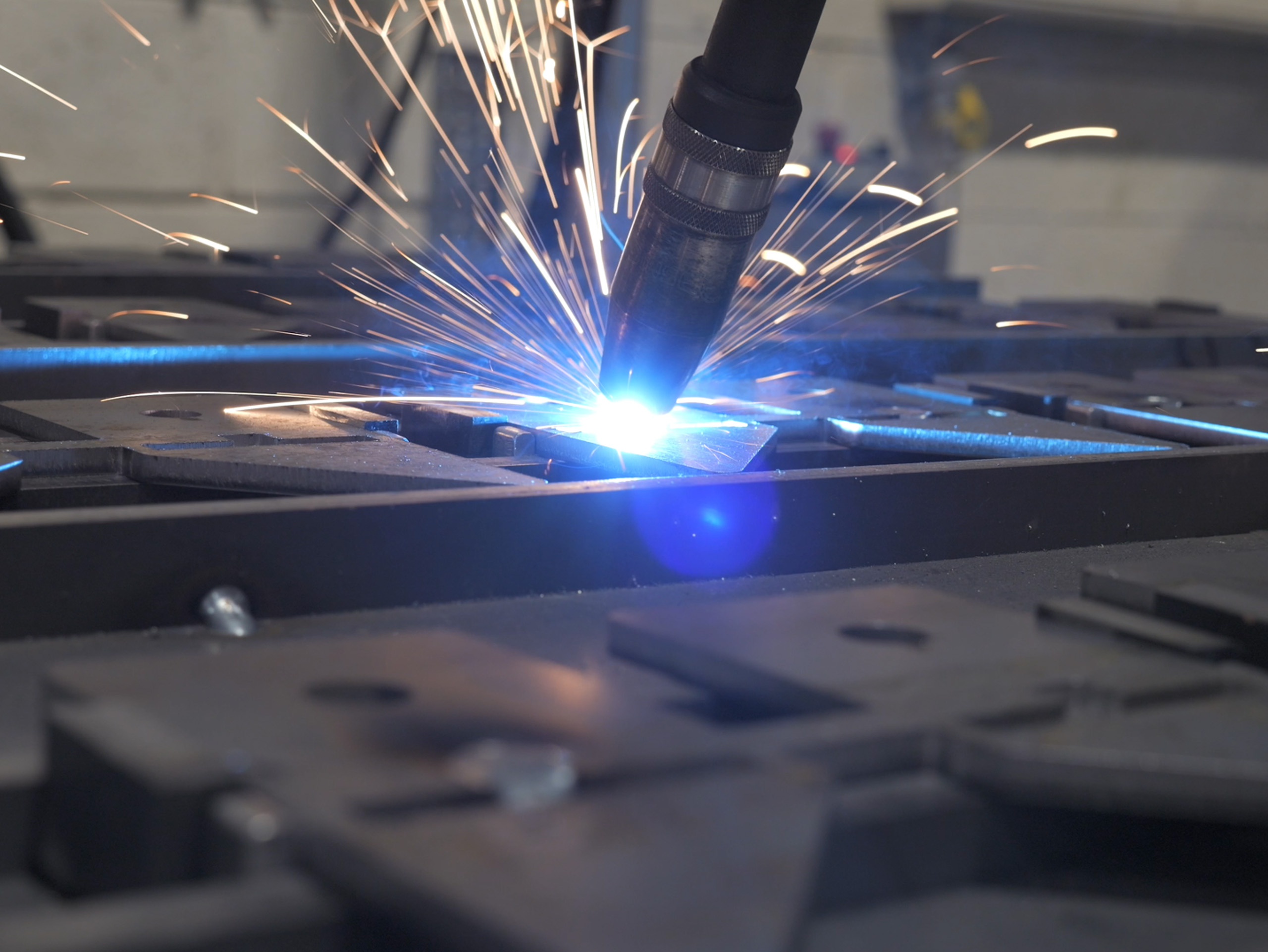














Cobots in manufacturing are now firmly established as a practical form of robotic automation across many industries. As manufacturers face rising costs, skills shortages, and pressure to improve productivity, collaborative robots offer a flexible and efficient way to automate without replacing human workers.
Unlike traditional industrial robots, cobots are designed to work alongside humans on the factory floor. They integrate into existing equipment, support a wide range of tasks, and help manufacturers improve production output while maintaining safety and quality.
This guide explains what collaborative robots are, where they fit in manufacturing operations, how they differ from industrial robots, and how Olympus Technologies helps businesses implement collaborative robot solutions that deliver measurable results.
What Are Cobots? Understanding Collaborative Robots
Collaborative robots, commonly referred to as cobots, are robotic systems designed for shared workspaces. They differ from traditional industrial robots by incorporating safety features that allow them to operate in close proximity to human operators.
Traditional robots are typically isolated behind guarding and operate at high speed with little tolerance for human interaction. Cobots, by contrast, are built to work alongside humans, responding to force, contact, and changes in the environment.
Cobots are widely used in manufacturing environments where flexibility, adaptability, and human involvement remain essential. They are particularly valuable for medium sized businesses that need automation without the complexity or cost of large-scale robotic cells.
Key Characteristics of Cobots
Cobots share several defining characteristics that make them suitable for modern manufacturing.
Safety features are built into the design. Force sensing, speed control, and collision detection allow cobots to reduce risk and support safe interaction with human workers.
Ease of programming is another defining factor. Many cobots can be programmed through intuitive interfaces or by guiding the robotic arm through a task. This reduces reliance on specialist programming skills and shortens implementation time.
Cobots are also adaptable. They can be redeployed between processes, support new tasks, and integrate with existing equipment such as conveyor belts, inspection stations, or machine tools.
Where Do Cobots Fit in Manufacturing Operations?
Cobots are most effective when applied to repetitive, physically demanding, or precision-based work where consistency matters. Across many applications, they support human operators rather than replacing them.
Common cobot applications include:
Assembly Tasks
In assembly operations, cobots handle repetitive task elements such as fastening, positioning, or component transfer. This reduces human error and helps maintain consistent quality.
By automating parts of the process, manufacturers can improve productivity while allowing skilled workers to focus on complex or value-adding work.
Packaging and Palletising
Cobots are frequently used in packaging and palletising tasks along the production line. They can work with conveyor belts to sort, pack, and stack products efficiently.
These applications often reduce costs by improving throughput and reducing strain on the workforce, particularly in high-volume environments.
Machine Tending
Machine tending is one of the most common uses of collaborative robots. Cobots load and unload machinery, allowing machines to run continuously across multiple shifts.
This has a significant impact on production output and helps manufacturers address labour shortages without increasing headcount.
Bin Picking and Material Handling
Cobots equipped with sensors and vision technologies can perform bin picking and material handling tasks. These applications improve accuracy and reduce manual handling on the factory floor.
Quality Inspection
Cobots are increasingly used in inspection processes. They position parts consistently, support measurement routines, and reduce variation caused by manual handling. This leads to improved inspection accuracy and more reliable quality control.
Cobots vs Traditional Industrial Robots
Understanding the difference between collaborative robots and traditional industrial robots is essential when planning robotic automation projects.
Traditional industrial robots are well suited to high-speed, high-volume tasks but require guarding, complex integration, and dedicated space. Cobots are designed for flexibility and collaboration.
Cobots typically:
- Work safely alongside humans
- Integrate into existing processes
- Require less space and infrastructure
- Support many applications across a single site
For many manufacturers, particularly those with mixed production or frequent changeovers, cobots offer a more practical automation solution.
The Business Case for Cobots: Costs and Productivity
When evaluating cobots in manufacturing, cost is an important consideration, but it should not be viewed in isolation.
Understanding Costs
Costs typically include:
- The cobot or robotic arm
- End-of-arm tooling
- Sensors or inspection equipment
- Programming and integration
- Training and support
- Maintenance over time
Compared to traditional robots, cobots often involve lower implementation costs and shorter project timelines.
Productivity and Operational Impact
Cobots deliver value by improving productivity and reducing waste. They support efficient processes, reduce human error, and help manufacturers achieve consistent output.
By automating repetitive or physically demanding tasks, cobots reduce strain on workers and improve overall workplace conditions. This often leads to higher retention and better use of skilled labour.
Many businesses also see a positive impact on market share by improving delivery reliability and product quality.
Safety in Collaborative Robotics
Safety is central to successful cobot implementation. Although cobots are designed with safety features, each project requires careful planning.
Risk assessments consider:
- Force and speed limits
- Interaction between humans and robots
- Task-specific hazards
- Environmental factors on the site
Cobots rely on sensors and control systems to monitor contact and movement. These systems help ensure safe operation without compromising efficiency.
Olympus Technologies applies a structured safety process to every project, ensuring that collaborative robots are implemented in line with industry standards and best practice.
The Role of Artificial Intelligence and New Technologies
Advances in artificial intelligence and robotics are expanding what cobots can achieve. Vision systems, adaptive programming, and intelligent sensors allow cobots to handle greater variation and complexity.
These new technologies improve accuracy, reduce setup time, and allow cobots to adapt to changes in production without extensive reprogramming.
As innovation continues, cobots will play an even greater role across many industries, supporting more advanced inspection, handling, and assembly tasks.
Implementing Cobots Successfully
Successful cobot implementation depends on expertise, planning, and knowledge of manufacturing processes.
Key steps include:
- Identifying suitable tasks and processes
- Assessing the production environment
- Integrating cobots with existing machinery and equipment
- Providing training for operators and maintenance teams
- Ongoing support and optimisation
Olympus Technologies provides services covering consultation, system design, integration, training, and long-term support. This ensures that cobots deliver value throughout their lifecycle.
The Future of Cobots in Manufacturing
Cobots are becoming an essential part of modern manufacturing strategies. As technologies improve and costs continue to fall, adoption is expected to grow across industries.
Future developments will focus on greater flexibility, improved collaboration with humans, and deeper integration into production systems.
For manufacturers looking to remain competitive, collaborative robots represent an opportunity to create more efficient, resilient, and productive operations.
Main Benefits of Cobots in Manufacturing
- Safe operation alongside human workers
- Reduced repetitive and physically demanding tasks
- Improved productivity and production output
- Flexible integration with existing equipment
- Lower costs compared to traditional industrial robots
- Support for quality, inspection, and accuracy
Conclusion
Cobots in manufacturing offer a practical and scalable approach to automation. They enable manufacturers to reduce costs, improve productivity, and support their workforce without the complexity of traditional robotic systems.
With the right expertise and implementation strategy, collaborative robots can deliver a significant impact across production, quality, and operations.
Olympus Technologies works with manufacturers to design and deliver collaborative robot solutions that meet real operational challenges. From initial project planning to long-term support, our focus is on helping customers achieve measurable results through effective automation.
If you are exploring cobots for your manufacturing operation, Olympus Technologies can provide the knowledge, tools, and support needed to implement solutions efficiently and safely.