












Welding remains a critical operation across UK manufacturing, construction, and fabrication industries. From automotive components to structural steel and low-volume parts, welding tasks are central to production.
At the same time, businesses are under pressure from rising labour costs, shortages of skilled welders, increasing energy usage, and tighter quality requirements.
Manual welding often hides its true cost. Beyond wages, the actual cost per weld includes consumables, rework, downtime, and lost productivity. These challenges are pushing many businesses to look at cobot welding as a cost-effective solution.
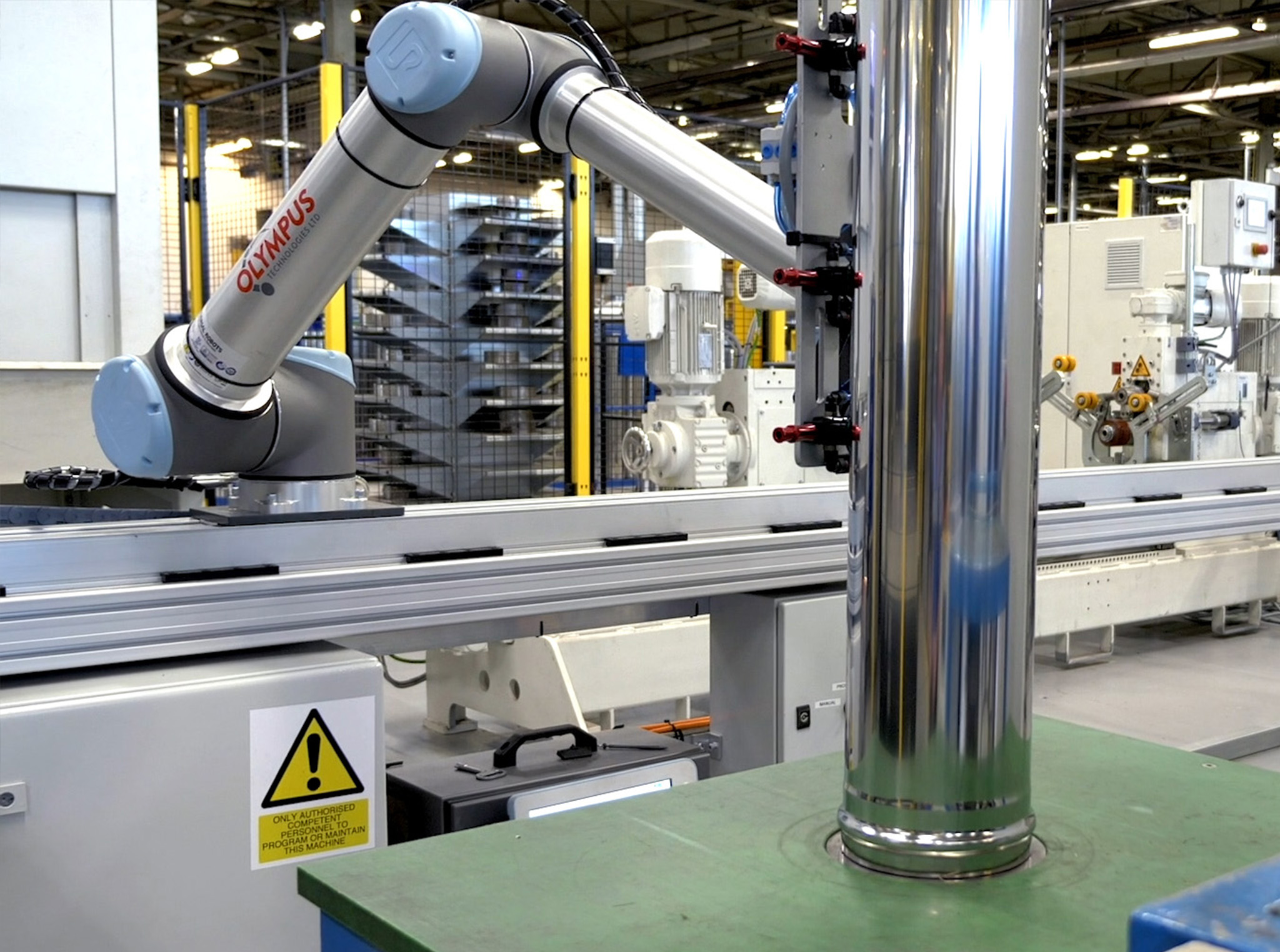
Collaborative robots allow manufacturers to automate repetitive welding tasks while still working safely alongside human workers. Olympus Technologies helps UK teams understand cobot welding cost per weld using a clear, practical model that supports informed investment decisions.
What Drives Welding Costs? A Full Breakdown
Before calculating cost per weld, it is essential to understand what contributes to total welding costs in real operations.
Labour Costs and Skills Availability
Labour costs remain the largest factor in welding operations. These include:
- Hourly wages and overtime
- Employment overheads
- Training and skills retention
- Productivity losses caused by fatigue or absence
Unlike human welders, cobots deliver consistent output without variation between shifts. This leads directly to reduced labour costs and improved efficiency.
Welding Equipment, Systems, and Energy Usage
Welding equipment includes:
- Welding power sources
- Wire feeders
- Welding torch assemblies
- Ventilation and extraction systems
Energy usage varies depending on welding processes such as metal inert gas welding, tungsten inert gas welding, or other welding techniques. In manual welding, energy use is often inconsistent due to variable cycle times and rework.
Consumables and Rework
Consumables include wire, shielding gas, contact tips, and nozzles. Inconsistent manual welding increases waste and drives up cost.
Rework and scrap further increase total cost through additional labour, consumables, and delays to the production line.
Overheads and Floor Space
Traditional industrial robots often require significant floor space, guarding, and infrastructure. Cobot welding systems are more compact and easier to integrate into existing systems, reducing overhead and space requirements.
Introducing the Olympus Technologies Cobot Welding Cost Per Weld Model
Olympus Technologies uses a simple, transparent model to calculate cobot welding cost per weld UK and compare it to manual welding.
At a high level:
Total welding cost per period ÷ Acceptable welds produced = Cost per weld
The difference lies in how automated processes control variability and reduce waste.
Key Variables That Affect Cost Per Weld
When calculating cobot welding cost per weld UK, the following factors are essential.
Initial Investment and Estimated Cost
This includes:
- Cobot and robotic arm
- Welding equipment and power sources
- Safety protocols and ventilation
- Integration with existing systems
The estimated cost is spread over the system’s working life to calculate a per-weld impact.
Throughput and Cycle Times
Cobots deliver predictable cycle times. This improves planning and allows accurate costing for high mix or low volume parts as well as higher volume production.
Labour and Supervision
Cobot welding systems reduce direct labour involvement. One operator can oversee automated processes rather than performing manual welding continuously. Skilled welders can be redeployed to higher value tasks such as inspection, setup, or intricate designs.
Consumables per Weld
Robotic welding uses consumables more efficiently. Stable wire feed, consistent torch positioning, and controlled power delivery reduce waste.
Reject Rate and Quality Assurance
High quality welds reduce rework and scrap. Cobot welding systems deliver consistent welds that support quality assurance and customer requirements across various industries.
Example: Reducing Welding Costs with Cobot Welding
Consider a UK manufacturer running a production line with repetitive welding tasks.
Before Automation
- Manual welding performed by skilled welders
- Variable cycle times
- Rework caused by human variation
- Higher labour costs and downtime
The actual cost per weld remains difficult to predict.
After Implementing Cobot Welding
With a cobot welding solution from Olympus Technologies:
- Robotic welding handles repetitive tasks
- Human workers supervise and manage quality
- Cycle times become stable
- Rework is reduced
- Enhanced productivity is achieved
The result is a lower total cost per weld and improved operational efficiency.
Beyond Cost: The Broader Benefits of Cobot Welding
While cost reduction is a primary advantage, cobot welding delivers additional long term benefits.
Improved Quality and Consistency
Cobot welding systems produce high quality welds repeatedly. Unlike human workers, they do not suffer fatigue or inconsistency.
Increased Productivity and Reduced Downtime
Automated welding reduces downtime caused by staffing gaps and rework. Regular maintenance and predictable performance support higher uptime.
Flexibility Across Industries
Cobots are well suited to:
- High mix environments
- Low volume parts
- Automotive manufacturing
- Construction and metal fabrication
Easy setup and fast changeovers allow businesses to respond quickly to changing demand.
Safer Working Environment
Automated welding reduces exposure to heat, fumes, and repetitive strain. Safety protocols and ventilation systems support safer operations.
Implementing Cobot Welding with Olympus Technologies
Successful implementation starts with understanding your current welding operations.
Key steps include:
- Mapping welding tasks and cycle times
- Calculating current cost per weld
- Identifying repetitive tasks suitable for automation
- Reviewing ROI considerations and investment horizon
- Planning seamless integration with existing equipment
Olympus Technologies provides assessment, integration, training, and ongoing support to ensure cobot welding delivers measurable results.
FAQs About Cobot Welding Cost Per Weld in the UK
Is cobot welding cost effective for low volume or high mix work?
Yes. Cobots are ideal for high mix, low volume environments where traditional industrial robots lack flexibility.
How does cobot welding compare to manual welding?
Cobot welding reduces labour costs, improves quality, and delivers consistent welds with predictable cycle times.
Can cobots integrate with CNC machines and existing systems?
Yes. Cobot welding systems can seamlessly integrate with CNC machines and other automated processes.
What is the typical payback period?
Many businesses see payback within one to three years, depending on production volume and labour costs.
Conclusion: Reduce Welding Costs with Olympus Technologies
Understanding cobot welding cost per weld UK allows manufacturers to move beyond headline prices and focus on true operating cost.
By combining robotic welding, controlled welding processes, reduced labour dependency, and improved quality, cobot welding delivers a cost effective path to automation.
Olympus Technologies supports UK manufacturers with proven cobot welding solutions that enhance productivity, reduce downtime, and improve profitability across a wide range of industries.
To calculate your actual cost per weld and explore a tailored solution, contact Olympus Technologies for an expert consultation.