













Across many industries, UK manufacturers are under pressure from rising labour costs, labour shortages, and increasing customer expectations.
Automation is no longer just a long-term ambition. For many businesses, it is a practical response to operational constraints on the factory floor.
Collaborative robots are often the first step. Unlike traditional industrial robots, cobots can be deployed alongside human workers, integrated into existing systems, and adapted to new tasks as production requirements change.
However, interest alone does not justify investment. Decision-makers need a clear understanding of cobot ROI. That means calculating cost savings, understanding the total cost of ownership, and assessing the true value delivered over time.
This guide explains how UK manufacturers can calculate ROI, assess payback time, and build a credible business case for investing in cobot systems.
Understanding Cobot ROI Beyond the Initial Cost
Cobot ROI is often misunderstood. Many companies focus only on the price of just the robot, without considering the wider impact on productivity, quality, and efficiency.
Return on investment ROI should account for:
- Reduced labour costs through automating repetitive tasks
- Fewer errors and improved quality
- Increased output across multiple shifts
- Reduced downtime caused by manual processes
- The ability to redeploy staff to higher-value work
In many cases, cobots are used to automate repetitive tasks or physically demanding tasks that are difficult to staff consistently. This reduces reliance on manual labour while enabling human workers to focus on supervision, quality, and problem-solving.
The true value of a cobot is not limited to direct savings. Intangible benefits such as consistent quality, improved safety, and higher workforce retention also contribute to overall value, even if they are harder to quantify.
Calculating Cobot ROI and Payback Period
To calculate ROI accurately, manufacturers need to look beyond headline figures and understand all costs and benefits involved in an automation project.
Total Cost and Initial Investment
The initial investment for a cobot system typically includes:
- The cobot arm or robotic arm
- End effector or tool
- Software and control systems
- Installation and integration
- Training costs for operators and engineers
This total cost should reflect the complete system, not just the robot itself. Cobot systems are often easier to integrate than traditional robots, which helps keep installation and setup time under control.
Ongoing Costs
Ongoing costs may include:
- Maintenance
- Software updates
- Occasional tooling changes
- Support and training refreshers
These costs are generally lower than those associated with traditional industrial robots, particularly where expert support is available.
Measuring Cost Savings and Productivity Gains
Savings typically come from:
- Reduced labour costs
- Increased productivity on the production line
- Improved efficiency in machine tending, welding, or assembly
- Reduced scrap and rework
- Greater consistency across production
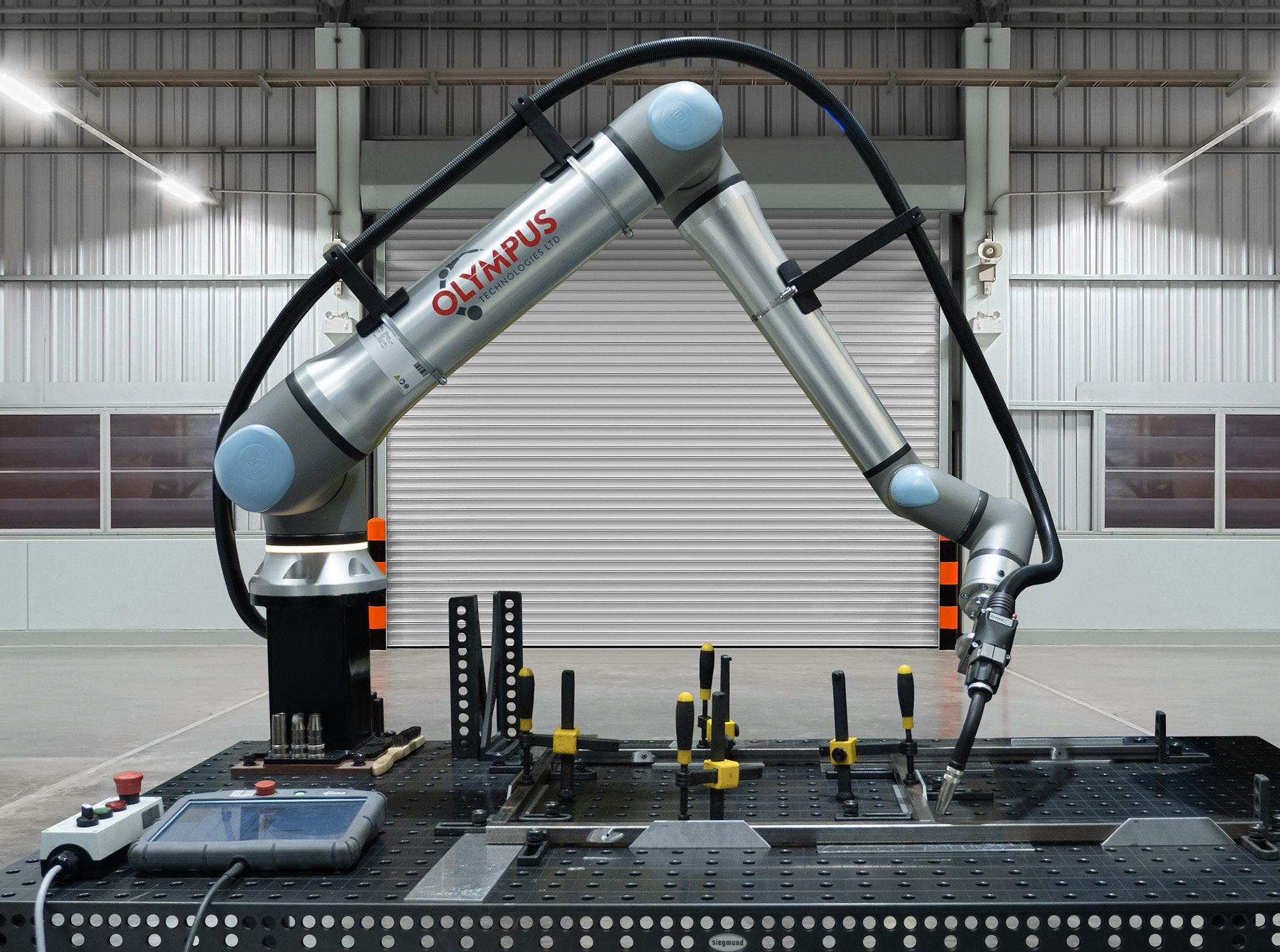
For example, a cobot welder or machine tending cobot can run across multiple shifts, delivering predictable output without fatigue. Over time, this leads to significant cost savings and reduced dependence on scarce labour.
Key Financial Metrics: From Payback Time to Net Present Value
Most UK manufacturers begin with payback period, but a strong business case often goes further.
Key metrics include:
- Payback period or payback time, showing how quickly the investment is recovered
- Return on investment, comparing net benefits against total cost
- Net present value, which accounts for the time value of money and future cash flows
- Expected savings over the life of the system
Calculating net present value or net present ROI helps companies understand the long-term impact of investing in automation, particularly when comparing cobots to traditional robots or manual processes.
Olympus Technologies supports customers with structured models to calculate ROI using realistic assumptions based on actual operations.
Building the Business Case Step by Step
Step 1: Review the Current Process
Start by identifying where inefficiencies exist. Common examples include:
- Repetitive tasks that tie up skilled workers
- Manual handling causing downtime or quality issues
- Bottlenecks on a production line
- Processes affected by staff absence or turnover
Many businesses discover that small automation changes deliver outsized benefits.
Step 2: Define Benefits and Savings
Benefits may include:
- Reduced labour costs
- Improved quality and fewer errors
- Increased output without extending shifts
- Improved safety for human workers
- Better use of existing staff
These benefits should be quantified wherever possible, using production data rather than assumptions.
Step 3: Account for All Costs
A credible automation investment plan includes:
- Equipment and tooling
- Installation and commissioning
- Training and change management
- Maintenance and support
Ignoring these costs weakens the business case and undermines confidence.
Step 4: Validate ROI and Sensitivity
Strong business cases test assumptions. What happens if volumes change. What if savings are lower than expected. Sensitivity analysis helps decision-makers understand risk and confidence levels.
Realistic Examples of Cobot ROI in Practice
Across industries, collaborative robots are delivering measurable ROI.
A cobot arm used for machine tending may allow one operator to manage several machines, reducing labour costs while increasing output.
A cobot welder can provide consistent quality and reduce rework compared to manual welding, particularly in high-mix production.
Assembly cobots reduce errors and improve consistency, leading to fewer customer complaints and less waste.
In each case, the return on investment comes from a combination of savings, productivity gains, and improved quality, not from labour reduction alone.
Overcoming Barriers to Investment
Despite clear benefits, some companies hesitate.
Workforce Concerns
Automation is often associated with job loss. In practice, cobots are more commonly used to enable humans, not replace them. Clear communication and training help build trust and acceptance.
Integration with Existing Systems
Modern cobot systems are designed to work with existing systems and production equipment. With expert support, integration can be straightforward and scalable.
Uncertainty Around ROI
Many businesses struggle with understanding ROI or calculating expected returns. Structured analysis and real-world examples help turn uncertainty into confidence.
Choosing the Right Partner
Successful automation is not just about technology. It is about understanding processes, constraints, and goals.
Olympus Technologies works with companies across UK manufacturing to deliver automation solutions that reduce costs, improve efficiency, and provide lasting value. From initial assessment through installation, training, and ongoing support, the focus is on outcomes rather than equipment alone.
Whether the goal is to address labour shortages, improve productivity, or support growth, collaborative robots can play a central role when deployed with a clear ROI strategy.
Conclusion: Turning Cobot Investment into Measurable Value
Cobot ROI is not a theoretical exercise. It is a practical framework for making better investment decisions.
When manufacturers calculate ROI properly, account for total cost, and focus on true value rather than just the robot, collaborative automation becomes easier to justify and easier to scale.
For businesses considering automation, Olympus Technologies provides the expertise, tools, and support needed to build a strong business case and deliver results on the factory floor.
To discuss your automation goals or request a tailored ROI assessment, speak to the Olympus Technologies team.
Steps to Calculating Cobot ROI
- Identify processes suitable for automation
- Calculate total investment including tooling, software, and training
- Measure expected cost savings and productivity gains
- Estimate payback period and return on investment
- Review net present value for long-term impact
- Validate assumptions using real production data