













Get your cobot welding cell running safely, consistently, and confidently, with operator readiness built for real shop floor conditions.
Collaborative robotic welding systems are increasingly used across the manufacturing industry to address labour shortages, improve consistency, and reduce strain from repetitive welding tasks. However, the success of a cobot welding system depends as much on operator readiness as it does on the robot arm, welding torch, or automation technology.
This article explains how operator training for collaborative robotic welding systems is typically structured, what skills different roles need, and how manufacturers can reduce risk and maximise productivity without overcomplicating training or overpromising capability.
Who This Guidance Is For
Operator readiness is most critical when collaborative welding is introduced into live production environments.
This guidance is relevant for:
- Teams commissioning cobot welding systems for the first time
- Manual welders transitioning into cobot assisted welding operations
- Supervisors and technicians responsible for uptime, quality, and safety
- High mix, low volume environments requiring frequent changeovers
Collaborative robots are designed to work alongside human operators. Preparing those operators properly is what allows the system to deliver its full advantage.
Share your welding process and robot model to discuss appropriate operator readiness requirements.
What Operators Typically Need to Be Able to Do
The objective of cobot welding training is not to turn operators into robotics specialists. It is to ensure they can safely operate, adjust, and recover a robotic welding system during normal production.
After appropriate training and handover, operators should be able to:
- Safely operate the cobot welding cell, including start up, stop, and recovery
- Set up jobs using fixtures, torch angles, TCP checks, and consumables
- Teach or adjust basic weld paths and parameters within defined limits
- Recognise and respond to common faults such as wire feed issues, arc instability, or alarms
- Maintain weld consistency through repeatability, heat input awareness, and basic quality checks
Typical skills by role
| Skill | Operator | Welder | Technician | Supervisor |
|---|---|---|---|---|
| Cell start up and stop | Yes | Yes | Yes | Yes |
| Teach weld path | Basic | Yes | Yes | Review |
| Parameter edits | Limited | Yes | Yes | Review |
| Fault recovery | Basic | Yes | Yes | Yes |
| Quality checks | Yes | Yes | Support | Review |
| Basic maintenance | No | Basic | Yes | Oversight |
Safety First: Collaborative Does Not Mean Risk Free
Unlike traditional industrial robots, cobot welding systems include built in safety features. However, robotic welding remains a hazardous task and requires proper safety protocols, training, and risk assessment.
Cobot Welding Hazards to Address
Operator readiness must account for:
- Pinch and crush zones around the robot arm and tooling
- Unexpected motion during restart or recovery
- Hot work risks associated with arc welding or laser welding
- UV exposure and spatter requiring welding curtains
- Fume extraction and ventilation requirements
- Interaction between human workers and moving equipment
Built In Safety Features Versus Required Safeguards
Cobot safety features often include:
- Speed and force limits
- Collision detection
- Safe stop and monitored stop functions
Depending on the welding operation, material handling, and risk assessment, additional safeguards may still be required:
- Welding curtains or screens
- Area scanners or defined safety zones
- Localised guarding or safety cages
- Interlocks on fixtures or access points
Operator training should clearly explain which risks are mitigated by the system and which still require procedural control.
Safe Operating Procedures
Clear and documented SOPs are essential for safely operating cobot welding systems.
These typically include:
- Pre operation checks before welding tasks
- Permitted interventions during operation
- Lockout and tagout guidance
- Emergency response actions
Example safety checks for cobot welding cells
| Check | Frequency | Owner | Why it matters |
|---|---|---|---|
| Torch condition | Daily | Operator | Prevent defects |
| Cable routing | Daily | Operator | Avoid damage |
| Safety function test | Weekly | Technician | Ensure protection |
| Fume extraction | Daily | Operator | Worker safety |
| Emergency stop | Weekly | Supervisor | Compliance |
Typical Training Pathways
Training for cobot welding systems is usually delivered through a combination of approaches, depending on risk, complexity, and internal capability.
On Site Instruction
Often used where operators learn directly on the installed cobot welding cell and real welding process.
Off Site or Lab Based Training
Used to standardise fundamentals across multiple sites or introduce teams to collaborative welding concepts.
Train the Trainer Models
Used where organisations want to build internal capability and scale knowledge across shifts or locations.
Training formats compared
| Format | Best for | Duration | Prerequisites | Outcome |
|---|---|---|---|---|
| On site | Live production | 1 to 3 days | Installed cell | Confident operators |
| Off site | Standardisation | 1 to 2 days | None | Core understanding |
| Train the trainer | Scale | 2 to 3 days | Experienced staff | Internal capability |
Typical Curriculum Structure
Cobot welding training is most effective when delivered in practical, modular steps.
Module One: Cell Overview and Workflow
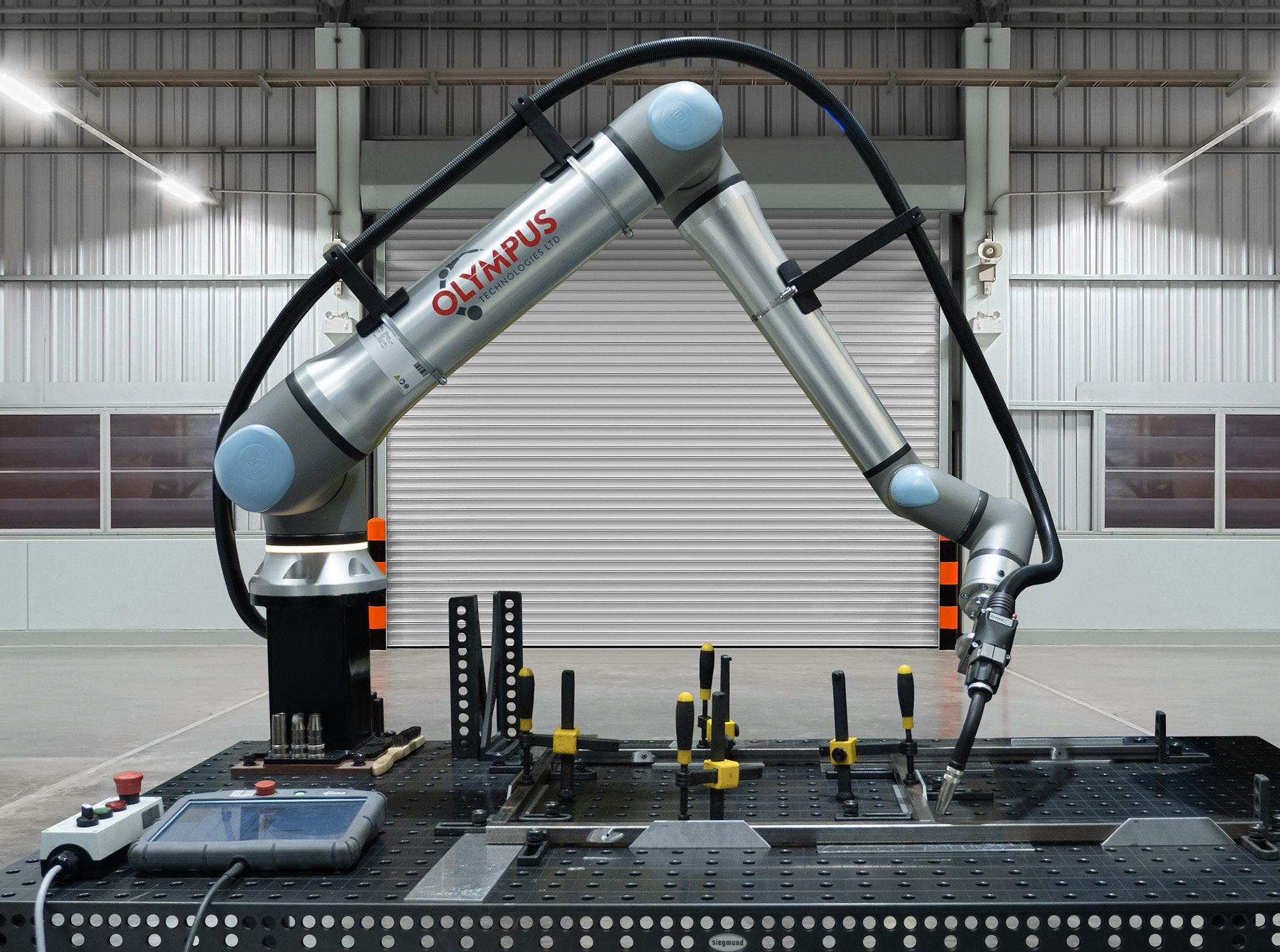
Understanding the robotic welding system, including the robot arm, welding torch, wire feeder, fixtures, safety hardware, and any positioners.
Module Two: Basics of Cobot Operation
Start up, shutdown, homing, jogging, frames, payload awareness, and safe manual guidance.
Module Three: Teaching and Programming for Welding
Teaching weld paths, approach and retreat moves, path smoothing, speed control, and saving repeatable setups for changeovers.
Module Four: Welding Fundamentals for Consistent Results
Torch angle, stick out, travel speed, heat input, and recognising common weld defects.
Module Five: Quality Checks and Documentation
Visual inspection routines, sample coupons, parameter logging, and traceability basics.
Module Six: Troubleshooting and Recovery
Arc start failures, wire feed issues, torch collisions, alarms, and repeatability drift.
Module Seven: Maintenance Essentials
Consumables, cleaning, calibration checks, and planned maintenance routines.
Manual Welding Versus Cobot Welding: Setting Expectations
Cobots do not remove the need for skilled welders. They change how welding skills are applied.
What Cobots Improve Quickly
- Consistency and repeatability
- Reduced fatigue from repetitive welding tasks
- Predictable throughput and improved productivity
- Reduced variability caused by human error
What Still Requires Human Expertise
- Welding process selection
- Joint preparation and fixturing decisions
- Quality judgement and exception handling
- Continuous improvement
Responsibilities comparison
| Task | Human | Cobot | Shared |
|---|---|---|---|
| Process selection | Yes | No | No |
| Weld execution | No | Yes | No |
| Quality judgement | Yes | No | Yes |
| Changeovers | Yes | No | Yes |
Preparing for Operator Readiness
Preparation before training improves outcomes.
Manufacturers should ensure:
- Parts, jigs, and fixtures are available
- Welding procedures are defined where applicable
- Consumables and PPE are ready
- Fume extraction and welding curtains are in place
- Sample joints are prepared
Capturing baseline KPIs such as defect rate, cycle time, and rework causes allows operator readiness efforts to be linked to measurable productivity improvements.
Validation and Competency Sign Off
Operator readiness is typically validated through practical demonstration rather than written tests.
Practical Validation May Include
- Demonstrating safe operation
- Teaching a sample weld
- Running a changeover
- Recovering from a simulated fault
Typical Documentation
- Attendance records
- Competency checklists
- Recommended SOPs
- Maintenance starter guidance
This creates confidence that the system can be safely operated within defined limits.
Ongoing Support After Handover
Post commissioning support reduces risk and protects productivity.
This may include:
- Short hypercare periods during early production
- Remote support for alarms or parameter adjustments
- Refresher training or onboarding for new operators
Clear ownership of support responsibilities is essential for long term success.
Frequently Asked Questions
How long does operator training usually take?
Typically one to three days depending on system complexity.
Do cobot welding systems require guarding?
Sometimes. This is determined by risk assessment.
Do operators need programming experience?
No. Most systems are designed for guided operation.
What is the difference between training welders and technicians?
Welders focus on process and quality. Technicians focus on recovery and maintenance.
Can training be tailored to a specific system and process?
Yes. Operator readiness should always reflect the actual application.
What safety standards apply?
Safety requirements depend on region, process, and system design and should be confirmed during risk assessment.
Next Step: Discuss Operator Readiness for Your Cobot Welding Cell
If you are planning or operating a collaborative robotic welding system, the next step is clarifying operator readiness, safety responsibilities, and handover requirements.
Useful inputs include:
- Robot model
- Welding process
- Shift pattern
- Current challenges
Get in contact to discuss welding training available here at Olympus Technologies.