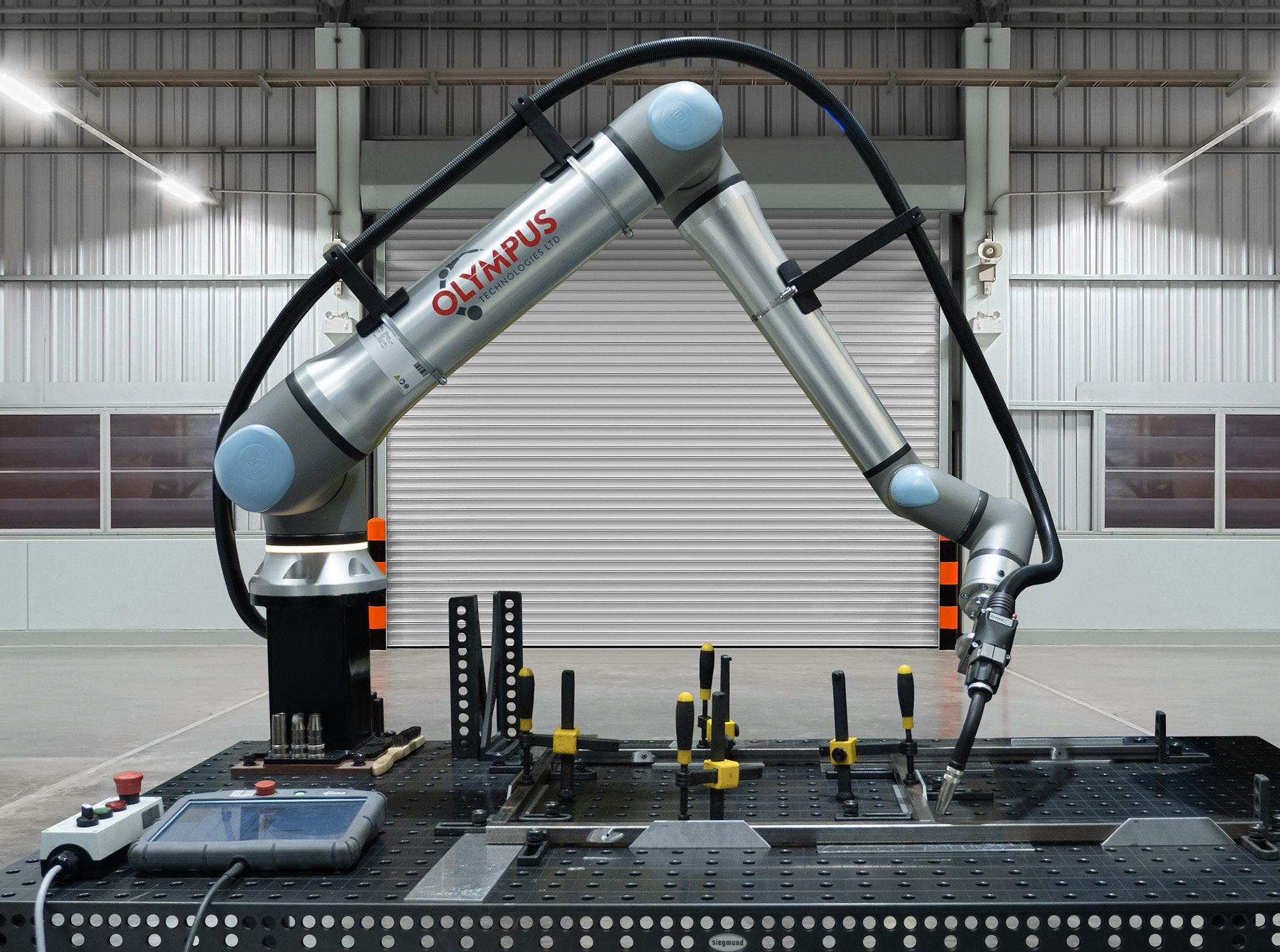















Choosing the right end effector for Universal Robots is one of the most critical decisions in any automated system. In our experience at Olympus Technologies, most performance issues in robotic systems do not come from the robot arm itself. They come from end of arm tooling that was “good enough” on day one and a liability six months later.
Your end effector determines gripping force, accuracy, speed, maintenance effort, and whether the robot performs reliably on a real production line. Change products, environments, or throughput targets later, and the wrong gripper choice will punish you.
This guide is written to support proper decision making. Not catalog descriptions. Not vendor hype. Practical selection logic you can use internally.
Start With the Part, Not the Robot
The robot is the easy bit. The part is what drives the right end effector.
Porosity
Porosity is one of the biggest causes of failure with vacuum based solutions. Corrugated cartons, paper sacks, baked goods packaging, and cast materials leak air. Suction cups may seal during testing and fail in production.
This is why suction ratings lie. A vacuum gripper that works on a sealed test sample can fail once dust, deformation, or air leakage appears on the production line.
Vacuum grippers struggle here. Mechanical grippers or sealed grippers are often more suitable.
Rigidity and Deformation
Soft or flexible objects deform under closing force. Rigid objects crack under excessive pressure.
Clamp grippers and parallel grippers provide high gripping force and repeatability, but without force control they can crush packaging, glass panels, or delicate components.
Adaptive and soft grippers use compliance to reduce damage risk, but trade speed and payload.
Surface Condition
Surface condition matters as much as material.
Smooth, clean surfaces suit suction. Oily, dusty, textured, or labelled cartons reduce vacuum reliability. Adhesive labels and inconsistent gripping surfaces are common causes of lost picks.
Mechanical jaws and external gripping solutions are less sensitive to surface condition.
Contamination and Environment
Oil mist, flour dust, moisture, washdown requirements, or temperature extremes all affect gripper life.
Compressed air systems introduce contamination risk. Vacuum lines clog. Soft robotics technology degrades faster in harsh environments.
The operating environment must be considered early, not after failures appear.
Part Characteristics That Drive Gripper Choice
| Part property | What it affects | Gripper types impacted | Typical mistake |
|---|---|---|---|
| Porosity | Suction reliability | Vacuum grippers | Assuming more suction fixes leaks |
| Deformation | Damage risk | Clamp grippers | No force control |
| Surface texture | Seal quality | Suction cups | Ignoring dust or labels |
| Weight | Required gripping force | Adaptive grippers | Overloading soft fingers |
| Environment | Service life | Pneumatic systems | No filtration planning |
Vacuum Grippers: When They Are Unbeatable and When They Lie
Vacuum grippers are popular for good reason. They are fast, simple, and cost effective in the right application.
Where Vacuum Excels
Vacuum grippers excel in high speed material handling of flat, smooth objects lifted from above. Typical examples include cartons, trays, sealed boxes, and products on conveyor belts.
They are well suited to palletising, depalletising, and pick and place tasks where precise operation and minimal maintenance are priorities.
Multi pick vacuum heads allow high throughput with minimal complexity.
Failure Modes Buyers Underestimate
Vacuum grippers fail quietly. Leaks increase recovery time. Dust blocks filters. Oil reduces seal quality. Lost picks increase cycle time and downtime.
Air pressure stability is critical. Compressed air quality is often overlooked until production suffers.
Vacuum Myths
More suction does not fix poor sealing. It increases energy use and wear.
Vacuum is not always gentle handling. High negative pressure can deform thin packaging or baked goods.
Clamp and Fork Grippers: Control at a Cost
Clamp grippers, mechanical grippers, parallel grippers, and radial grippers use jaws or fingers to grip externally.
Ideal Use Cases
These grippers are suited to rigid boxes, defined gripping edges, and applications requiring high gripping force, precision, and repeatability.
They are common in machine tending, handling systems, and applications where vacuum is unreliable.
Crush Risk and Compliance
Mechanical jaws behave like a human hand without feedback. Closing force must be controlled.
Electric clamp grippers allow precise control of opening force and closing force. Pneumatic grippers rely on air pressure and require careful regulation.
Passive compliance reduces damage risk but adds variability.
Changeovers and SKU Sensitivity
Clamp grippers are sensitive to width variation. Product changes often require jaw adjustment, finger replacement, or reprogramming.
This is manageable in low mix production but becomes costly in high mix environments.
Adaptive Grippers: High Mix Flexibility, Lower Throughput
Adaptive grippers use soft materials or multi articulated fingers to conform to object shape.
Where Adaptive Grippers Shine
Adaptive grippers are beneficial for high mix production lines handling diverse object sizes and shapes. They are ideal for pilot lines, R and D, and applications where tooling changes are expensive.
They integrate easily with collaborative robots and simple control software.
Trade Offs
Adaptive grippers have lower payload capacity, slower cycle times, and reduced long service life compared to rigid grippers.
Wear on flexible fingers is unavoidable.
When Adaptive Becomes a Liability
If throughput, precision positioning, or high gripping force is required, adaptive solutions become the bottleneck.
Magnetic, Gravity, and Niche Options
Magnetic Grippers
Magnetic grippers are effective for ferrous materials and eliminate clamping force and surface damage. They require careful risk assessment for power loss scenarios.
They are unsuitable for non ferrous materials.
Gravity and Passive Tooling
Sometimes the simplest tool wins. Gravity based fixtures and passive guides reduce complexity and failure points.
They require strict control of orientation and part consistency.
Utilities, Maintenance, and Lifetime Cost
Electric vs Pneumatic Grippers
Electric grippers provide precise control, repeatability, and feedback. Pneumatic grippers offer speed and simplicity but increase dependency on compressed air.
Compressed Air Reality
Air quality, filtration, and leaks directly affect efficiency and downtime. Many robotic systems fail due to poor air management rather than gripper design.
Maintenance and Spares
Vacuum seals, fingers, and soft materials are consumables. Mean time to failure should be planned, not discovered.
Utility and Maintenance Comparison
| Gripper type | Utilities required | Maintenance burden | Hidden costs |
|---|---|---|---|
| Vacuum grippers | Compressed air | Filters, seals | Energy use |
| Pneumatic grippers | Compressed air | Valves, seals | Leaks |
| Electric grippers | Power, control | Low | Upfront cost |
| Adaptive grippers | Power, control | High | Wear parts |
One Page Cobot End Effector Selection Matrix
| Application | Part characteristics | Best fit gripper | Why it works | Key risk | Typical industries |
|---|---|---|---|---|---|
| Palletising | Flat cartons | Vacuum grippers | Speed and simplicity | Porosity | Logistics |
| Machine tending | Rigid parts | Clamp grippers | Precision | Crush force | Manufacturing |
| High mix handling | Variable shapes | Adaptive grippers | Flexibility | Throughput | Food, R and D |
| Metal handling | Ferrous | Magnetic grippers | No damage | Power loss | Automotive |
Common Gripper Selection Mistakes
Optimising for payload only. Ignoring utilities availability. Designing for today’s SKU only. Underestimating contamination. Assuming one gripper fits every task.
How Gripper Choice Impacts Automation Performance
In palletising, gripper choice is a balance between speed and product damage. In machine tending, precision and robustness matter more than flexibility. In press brake tending, grip reliability and safety are critical.
End effector selection should be considered alongside the full automation strategy, not as an afterthought.
Final Thought From Olympus Technologies
End effectors are the device at the end of a robotic arm, but they decide the success of the entire automated system.
Choosing the right gripper is not about the robot. It is about the object, the environment, the task, and how the system must perform day after day with minimal human error.
Get that right, and the robot performs exactly as intended.
Get in touch with Olympus Technologies to find the perfect gripper for your solution - or let us design a bespoke gripper built specifically for your needs.